• Duration 16 Days
  • Trip Grade Moderate

    The moderate grade includes a one-week to fifteen-day itinerary. It can reach up to 4000-5000 meter altitude range, but the trails will be moderate (neither easy nor tough).

  • Country Nepal
  • Maximum Altitude 4,130 Meters
  • Starts Kathmandu
  • Ends Kathmandu
  • Activities Trekking
  • Best Time September to May

Highlights 

  • Explore UNESCO World Heritage Sites in the capital city before departing for Pokhara.
  • A scenic road ride from Kathmandu to Pokhara, and vice versa, before spending extended time on foot in the mountains. 
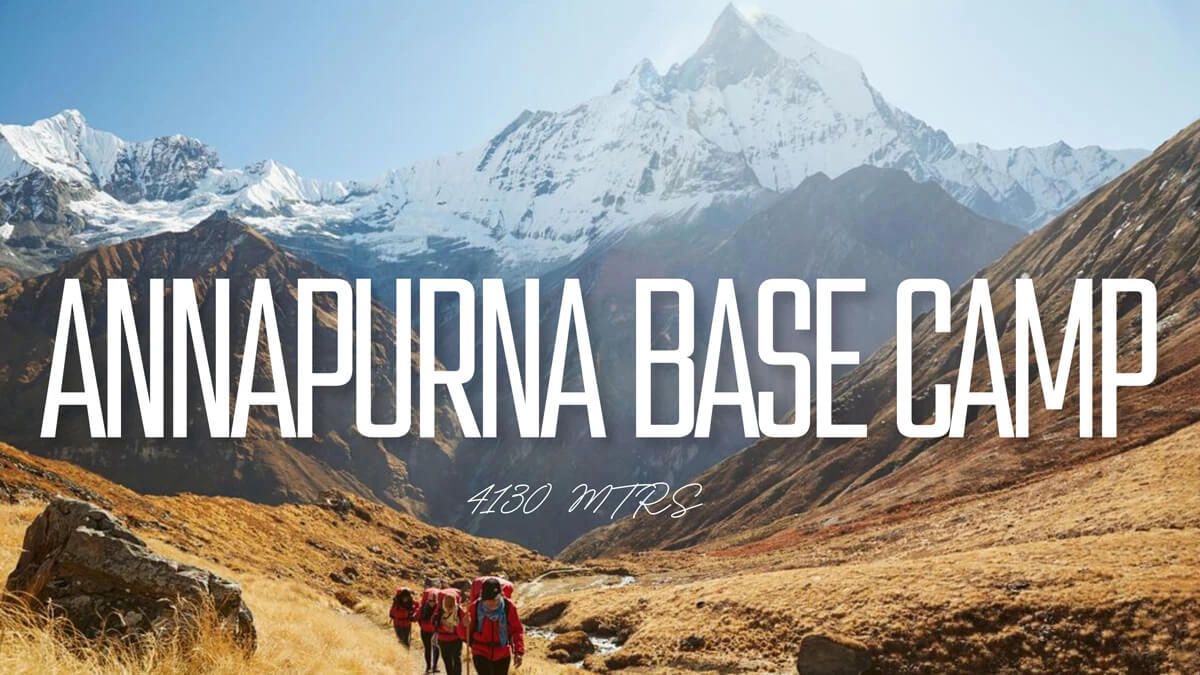
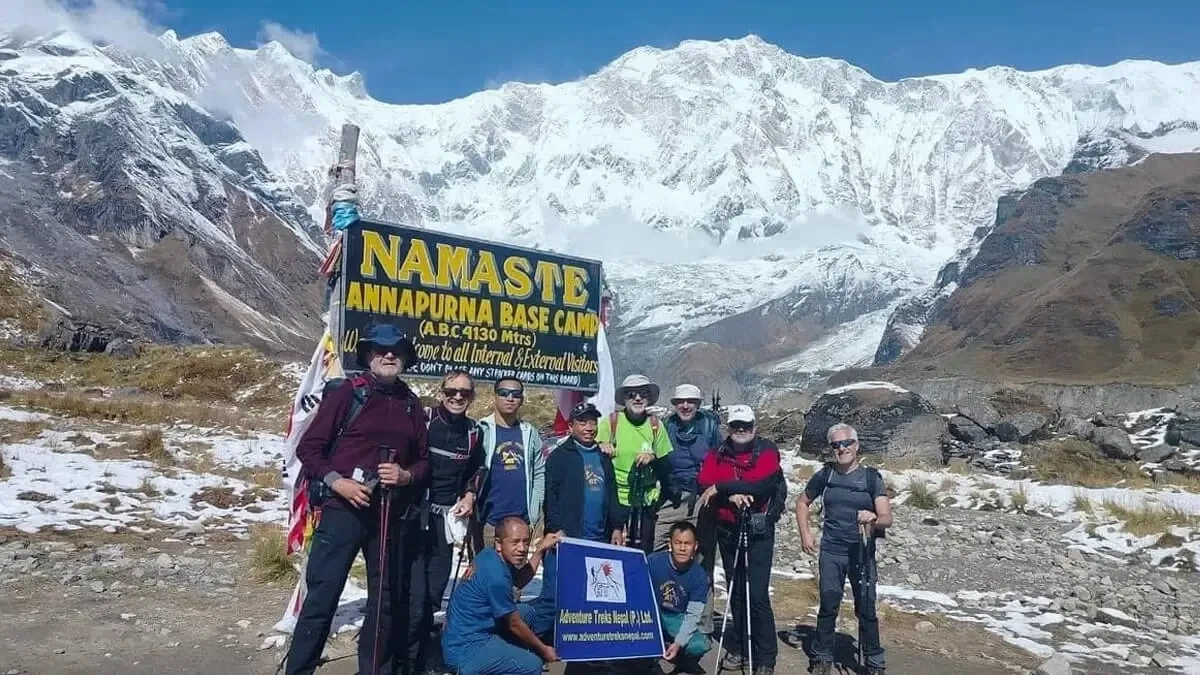
  • Test your stamina and physical endurance while stepping forward to the Annapurna Base Camp (4130 m), following mountain legends’ footsteps. 
  • Gain deep insight into unique Himalayan cultural assets as you traverse quaint settlements, especially those of the Gurung and Pun Magar communities.
  • Savor the beauty of the surroundings at villages, together with Spectacular vistas of the Annapurna and Dhaulagiri ranges, together with the surrounding serene environment.
  • Capture the freshness of the early morning on your camera roll when a glorious sunrise creates dramatic scenery. 
  • Enjoy trekking on the Annapurna trails, adorned with wild flowers, especially the rhododendron bushes of Ghorepani, while listening to the rustlings and enjoying the scents of wild flowers. 
  • Take a bath in the natural hot spring at Jhinu Danda, which relieves the pain you get from covering long distances with several ascents and descents. 

The Annapurna Base Camp Trek in comfort presents an opportunity to experience a well-paced journey on one of the most rewarding routes to the foothills of Mt. Annapurna (8091 m), the 10th highest mountain on Earth. With the appropriate guidance of our expert travel team, adventurers can experience a perfect combination of comfortable, modern lodges, premium service, and a moderate pace, soaking in the stunning mountainous landmarks. Regardless of fitness level and age group, this journey can be an iconic one for kids and seniors due to the routes’ better condition and proximity to Pokhara city. 

Yes, a traveller who has experience trekking at high altitude can perform better compared to a novice. Nevertheless, everyone gets wonderful surprises at every step during an exciting trip of more than two weeks. Since the experience is similar to the Everest Base Camp (5364 m) in the far eastern region of Nepal, planning for the 16 days Annapurna Base Camp Trek becomes the best for beginners. Transitions from lush valleys of low elevations to alpine meadows captivate you with incredible biodiversity and distinct local cultures. 

The trail takes you through the rhododendron forests of Ghorepani, reaching the Poon Hill station at 3210 m, an excellent vantage point that provides a wonderful scene of Annapurna, Dhaulagiri, Machhapuchhre, Nilgiri, Hiunchuli, Dhampus Peak, Tukuche Peak, and Gurja Himal.

What is the Annapurna Base Camp trek in comfort like? 

This 16 days itinerary to the Annapurna Base Camp trek is achievable year-round, offering wonderful memories, although some paths are challenging. Leaving behind the chaos of the cities, more advanced or modern technology, and busy lifestyles for a short duration, you arrive at Nayapul, the initial point of the official trek, by getting ready to cover long distances further ahead. At first, based on our trip plan, our representative from Adventure Treks Nepal transfers you to a comfortable hotel that offers superior amenities, including hot showers, upon your arrival at Tribhuvan International Airport. 

Before setting off for your Annapurna exploration, take some time to unwind and immerse yourself in cultural landmarks such as the Durbar Squares of Kathmandu, Patan, and Bhaktapur, along with Pashupatinath and Boudhanath. The next morning, a private jeep or tourist-standard 4WD takes you to Pokhara, Nepal’s lake city, following the winding road that descends alongside the Trishuli River. Take an evening stroll around the lakeside after taking a rest at a hotel, where you will stay for the night. On the 4th day, you head to the small village of Nayapul, located approximately 40 kilometers northwest of Pokhara.

 As the trek is not only physical endurance, it also includes the natural grandeur and native traditions, usually influenced by Tibetan Buddhism, while crossing beautiful villages in a comfortable way with gradual ascents. As you cross Nayapul, the trail will traverse settlements such as Ulleri, Birthanti and Ghorepani before reaching Poon Hill, a famous vantage point through Tadapani. In this section, the paths lead through a dense forest of rhododendrons and oaks, offering captivating scenery, but the prolonged sections of stone stairs can be strenuous as you gain nearly 1,000 meters of elevation in a single day. 

Once you enjoy the breathtaking sunrise from Poon Hill, make your way towards Machhapuchhre Base Camp—MBC (3700 m), crossing settlements such as Sinuwa, Bamboo, Dovan, and the Himalaya hotel, a collection of some teahouses. The major highlights in this stretch are dramatic scenery from MBC, delicious Himalayan cuisines, and locals’ warm hospitality. From here, start a journey early in the morning to reach the Annapurna Base Camp after a hearty breakfast, avoiding chilly winds that generally happen between 12 pm and 3 pm. 

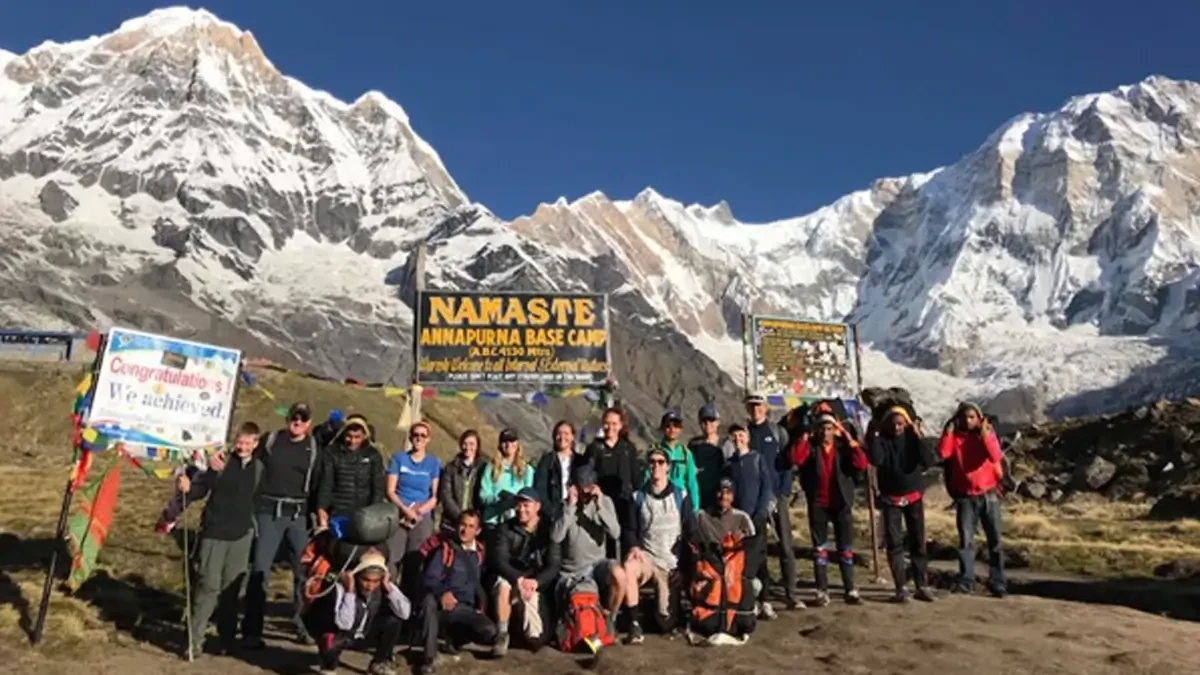
The surroundings of the base camp provide peace of mind, decorated with fluttering flags and surrounded by towering snow-clad mountains, taking away all stress and pain from long walks. Following the same route taken to the Annapurna Base Camp, get back to Bamboo, remembering every moment in the tranquil environment. Before a drive to Pokhara, traversing places such as Potana, Jhinu Danda, and Phedi, enjoy a natural hot spring at Jhinu Danda, which heals body aches and leg pains because of trekking for 11 days in high-altitude landmarks. 

On the day you arrive in Pokhara, you have a leisurely evening around the vibrant markets of the city, where you can also be offered to buy some souvenirs for your loved ones. The next day, a thrilling 25- to 30-minute mountain flight takes you to the capital city, offering aerial views of mountains, valleys, terraced fields, and hills. The itinerary of the package ends when you return to your homeland on the 16th day.

What wildlife can you spot on the Annapurna Base Camp trek in comfort route? 

The ABC route lies in the Annapurna Conservation Area, the largest and first protected area in Nepal, dedicated to preserving the region’s unique ecosystems, rich biodiversity, and cultural heritage. The conservation area, established in 1985 A.D., spans many districts, such as Manang, Mustang, Kaski, Parbat, Lamjung, and Myagdi, covering 7,629 square kilometers. As the purpose of this project is to promote sustainable tourism, we suggest not harming any vegetation or animals while observing them. Major wildlife you may spot on the way to the Annapurna Base Camp are Langur monkeys, snow leopards, Himalayan black bears, red pandas, musk deer, Himalayan Tahr, and Red pandas.

Capture their activities in their own habitats on your camera roll, along with the various birds like the Himalayan Griffon vulture, Himalayan Monal, Choughs, Blood Pheasants, and Snow Partridge, as the conservation area is also a haven to more than 500 species of birds. 

How will you immerse yourself in local cultures on the Annapurna Base Camp trek? 

Authentic local cultures and traditions, mainly influenced by Tibetan Buddhism, offer you the chance to learn something deep about the Himalayan cultural heritage. Ancient monasteries, gompas, maniwalls, and Chhortens, decorated by prayer wheels and flags, let you know historical events that made changes to the current system. Local people from communities such as Magar and Gurung, in their own customs, attract you the most as they reflect the firsthand traditions of remote settlements of the Annapurna region.

At some villages, you will get to try on their traditional attire and jewellery, paying for them for a while for photography. Generally, they are all helpful and also welcome you with delightful faces, following their traditions. If you are lucky enough to visit the trekking areas during festive times, you can also get involved in cultural activities and dances in folk music. While visiting gompas early in the morning, you can participate in morning prayer or chanting and also observe the daily activities of monks and nuns or sometimes rituals. In a friendly environment of teahouses, it feels easy to communicate with locals for more knowledge, as they are always ready to satisfy tourists.

When do you start seeing mountains on the Annapurna Base Camp trek in comfort? 

Even though you feel more at peace while trekking from Nayapul to Ulleri, the views of the mountains are not clearly visible yet due to the lower elevations. However, once you reach 2070 m, you will begin having better glimpses of distant vistas. Continuing the journey to Ghorepani, more awe-inspiring views of the Annapurna and Dhaulagiri ranges are treated to you. From the village of Chhomrong, you will see that the Machhapuchhre, Hiunchuli, and Machhapuchhre dominate the sky. Proceeding towards the Annapurna Base Camp via Himalaya Hotel, Deurali, and Machhapuchhre Base Camp offers closer, dramatic peaks covered by snow.

When you finally reach the most anticipated destination, Annapurna Base Camp, enjoy the panoramic 360-degree vistas of towering Himalayas such as Mt. Annapurna, Annapurna South, Machhapuchhre, Hiunchuli, Tent Peak, Gangapurna, and other surrounding peaks. You can not express in words how you feel at that time. 

Suitable for beginners? - Who can embark on the Annapurna Base Camp trek in comfort?

This 16 days Annapurna Base Camp trek is suitable for all kinds of trekkers, regardless of fitness level and age, with a well-scheduled plan, essential trekking equipment, and a proper acclimatization period. As we have experience in conducting this trek with participants ranging from young children of 9 years to elderly members above seventy, the journey can be truly a family-friendly adventure in central Nepal.

While seasoned trekkers enjoy each ascent and descent along with challenges, beginners feel quite overwhelmed near the high settlements and the areas of the Annapurna massif. foothills due to risks of high altitude sickness and cold-related problems as the level of oxygen gets lower and the temperature starts dropping as you climb the uphills.

Why is the Annapurna Base Camp Trek in comfort itinerary of 16 days the best?

Our schedule for each package is carefully designed, considering the needs and abilities of different individuals. The 16 days Annapurna Base Camp trek is the ideal choice for those seeking a culturally immersive, comfortable, and well-paced journey with a moderate level of difficulty. The package for the Annapurna Base Camp trek in comfortwith a well-arranged itinerary lets you recharge yourself in the capital city before spending a long period in isolated landmarks, along with essential trekking guidance and safety tips from the guide that accompanies you throughout the entire trip. 

The trekking distances and durations are appropriate for trekkers of all levels, allowing you to take part in savoring the splendor of nature without more stress. Ensuring each individual’s safety, comfort, and the entire trekking experience, our schedule allows you to move forward effortlessly, enabling you to adapt to the environment naturally.

To provide relief for a pained body, the itinerary will lead you through Jhinu Danda, where you can take a bath in natural hot springs, adding to the scenic trek to Potana before Pokhara. 

An aerial sightseeing flight to the capital city also lessens the journey fatigue of 16 days. Hence, the itinerary for the Annapurna Base Camp trek in comfort is considered the best, although the Annapurna Base Camp trekking - 14 days, and the Annapurna Sanctuary Trek - 10 days also offer once-in-a-lifetime memories, taking trekkers to the breathtaking foothills of Mt. Annapurna.

What is the total trekking distance of the Annapurna Base Camp trek 2026/2027?

The total trekking distance to the Annapurna Base Camp varies based on the duration of the package. Generally, the Annapurna Base Camp trek in comfort covers approximately 90 to 130 kilometers, including or excluding side hikes to several captivating destinations along the route. As per your request, we can also increase or decrease the daily trekking distance depending on your fitness level and preferences.

While covering more than two weeks in the Himalayas, trekkers cover the total trekking distance on this journey; the average trek distance is 8 to 9 kilometers within 5 to 6 hours per day. For more clarity, we have provided the daily trekking distance as follows: 

  • Naypul to Ulleri: 9-10 km
  • Ulleri to Ghorepani: 8-9 km 
  • Ghorepani to Chule:    12 - 12 km 
  • Chule to Chhomrong:    8-10 km
  • Chhomrong to Himalaya Hotel: 8-9 km
  • Himalaya Hotel to Machhapuchhre Base Camp: 5-6 km 
  • Machhapuchhre Base Camp to Annapurna Base Camp: 3-4 km
  • Annapurna Base Camp to Bamboo/Sinuwa: 10-12 km
  • Bamboo to Jhinu Danda: 10 to 11 km
  • Potana to Phedi: 8-9 km

How much does the Annapurna Base Camp trek cost in 2026? 

The cost for the Annapurna Base Camp in comfort trek (ABC trek) depends on the chosen travel company, itinerary, route, services, support, duration, food, transport, and accommodation.  As a result, there is no fixed price to trek to ABC due to the mentioned factors affecting the total price. You can make the trip either budget-friendly or upgrade it to be more comfortable and premium, based on your preferences. Selecting local or national trekking agencies will be more cost-effective than international ones. Without compromising experience and safety/well-being, cutting down unnecessary costs saves you from spending more than required.

Some beneficial tips to be free from unnecessary expenses include choosing local cuisines, basic teahouses, travelling in a group, using public or shared jeeps, bringing trekking equipment on rent, trekking during off-seasons, skipping hot showers and helicopter rides, and planning a budget.

Why choose us to trek to Annapurna Base Camp for kids and seniors?

We at Adventure Treks Nepal are available 24/7 to serve adventurers seeking thrilling journeys in different countries like Nepal, Tibet, and Bhutan. Our major responsibility is to ensure your security and comfort during the travel. From booking to processing documents, it is easier with us due to our expert team. You can check our previous clients’ reviews, which show that they are satisfied with our premium services, whether it is the short-term 

Annapurna Base Camp trek from Pokhara  or the longer Annapurna Circuit trek.  All our packages are well-structured to suit all trekkers at affordable prices. As a result, choose this comfortable Annapurna Base Camp trek in 2026/2027 if you want moderate-level trekking that offers rewards at each step. To know more about the trek and our services, you can contact us on WhatsApp or email us, as we respond in no time.

Itinerary

Note: If the provided itinerary does not meet your needs, we can design individualized travel plans based on your preferences

Trip Plan
Expand allCollapse all

At the arrival hall of Tribhuvan International Airport, our official from Adventure Treks Nepal will be waiting for you to give a warm welcome with a bookie or a garland in their hands. From the airport, you will be transferred to the hotel in Thamel. After a rest, attend a briefing meeting, where you will meet with your guide and other friends. 

As you have a day in Kathmandu before the Himalayan trekking, present your thoughts regarding activities you would like to do while in the capital city, which makes it easier for us to arrange. During the same session of the comfortable Annapurna Base Camp trek, you can ask questions regarding the trip if you have any inquiries. 

  • Max Altitude: 1,330m / 4,365 ft.
  • Accommodation: Hotel
  • Duration: 30 - 45 min

Wake up early in the morning to explore the Kathmandu valley, rich in cultural and natural diversity, showcasing both historical and modern attractions. For thrilling moments, have a hearty breakfast, and start visiting World Cultural Heritage sites. At first, head to discover Bhaktapur, a popular ancient city known for its timeless traditions, old history, and well-preserved architecture of the medieval period, located about 15 km east of Kathmandu. The major highlights of the place are the architecture founded by King Anand Dev in 889 A.D., the 15th-century palace of 55 windows, the golden gate, and the Nyatapole temple. 

Another destination is Pashupatinath, located at the bank of the Bagmati River, dedicated to Lord Shiva. At the temple, you can witness the Hindu Cremation process, and several pilgrims from all over the world who come to seek blessings from God. Afterwards, driving for 15 to 20 minutes, you will reach Boudhanath, a serene place where Buddhists from different countries can be spotted circumambulating the stupa, spinning prayer wheels, and offering prayers. As you complete the exploration, the guide assists you in choosing the best destination for lunch. 

  • Max Altitude: 1,330m / 4,365 ft.
  • Meals: Breakfast
  • Accommodation: Hotel
  • Duration: 6-7 Hours

With the excitement to reach Pokhara city and nearby trekking areas, get ready to travel on the Prithivi Highway alongside the Trishuli River, lush forests, and traditional settlements, depending on the comfort of the Annapurna Base Camp trek itinerary, leaving the capital city behind. Take a rest for a while before stretching your legs around the peaceful environment of the lakeside, which gives a kind of peace and satisfaction with the surroundings’ charm. 

Since you will start trekking the next day, you will prepare fully and buy any missing equipment. Enjoy the city’s advanced facilities and various food items together with Nepalese, Western, and Tibetan cuisines at popular restaurants. 

  • Max Altitude: 970m / 3,182 ft.
  • Meals: Breakfast.
  • Accommodation: Hotel
  • Duration: 6-7 Hours

Wake up with the wonderful sunrise, and take a short drive by a private jeep to Nayapul after a delicious breakfast at Pokhara. Nayapul is the initial point of the trek, located approximately 40 km from Pokhara and takes only one and a half hours to reach. The continuous walk takes you to Birethanti first, where you will verify all documents, such as the Annapurna Conservation Area Project permit and the Trekkers Information Management System card.

Afterwards, proceed to Tikhedunga by taking a left on the slight incline as you cross the river at Birethanti. During this session, you will cross two suspension bridges over the Bhurungdi Khola river before starting to climb up to Ulleri with steep ascents. 

  • Max Altitude: 2,020m / 6,630 ft.
  • Meals: Breakfast, Lunch and Dinner
  • Accommodation: Tea House
  • Duration: 5-7 Hours

Today, you will make your way towards Ghorepani, a popular stop on the Annapurna Base Camp trek route, traversing quaint settlements such as Banthati and Nangethati. Before reaching the destination, you will cross the suspension bridge over the stream, located inside the dense, lush forests. Enjoy walking on trails adorned with rhododendron trees; also have glimpses of some mountains when you are almost to Ghorepani.

  • Max Altitude: 2,810 / 9,220 ft.
  • Meals: Breakfast, Lunch and Dinner
  • Accommodation: Tea House
  • Duration: 3 - 4 Hours

Since you will hike up to Ghorepani Poon Hill station (3210 m), the guide will inform you of the beginning time after checking the forecast time to catch the time of glorious sunrise. Since the view of the sunrise over the Himalayas from here creates the most breathtaking scenery, capture the pictures before returning to the teahouse. The breathtaking vistas of snow-capped mountains such as Nilgiri, Tukuche Peak, Annapurna South, Dhaulagiri, Annapurna I, Barahi Shikhar, and Machhapuchhre make you want to spend more time, but you must continue the journey to Chule today, depending on the schedule. 

Leaving Ghorepani, the ascending trail takes you to Thabala Hill, which offers dramatic scenery of mountains. From here, the trekking becomes quite easier with descending paths to Deurali. Trails lead you towards a river after Banthanti, from where you will again ascend to the village of Tadapani. Taking the left path from here, further walking takes you to Chule. 

  • Max Altitude: 2,375m / 7,792 ft.
  • Meals: Breakfast, Lunch and Dinner
  • Accommodation: Tea House
  • Duration: 7 -8 Hours

After having a hearty breakfast, the day trek starts by taking ways via dense forests filled with rhododendrons, oaks, and birches. Continuous walk leads to terraced fields, which look mindblowing. Passing by cascading waterfalls and a suspension bridge, you will find trails with several ascents and descents, which take you to Chhomrong for an overnight stay. 

It is a beautiful village located in the lap of the giant Annapurna massif. Overnight in Chhomrong. As this village is located at the base of the Annapurna massif, it is a popular pausing point for those on the Ghorepani Poon Hill and ABC treks to acclimatize properly, together with a good destination for lodges and food. Firsthand Gurung and Magar cultures, traditional houses, terraced farmlands, and stone-paved paths attract you the most.  

  • Max Altitude: 2,170m / 7,119 ft.
  • Meals: Breakfast, Lunch and Dinner
  • Accommodation: Tea House
  • Duration: 4 - 5 Hours

In the first part of the 8th day of the Annapurna Base Camp trek in comfort, the descending trail leads you towards Chhomrong Khola, where a suspension bridge awaits you to cross it. Afterwards, you will begin climbing up hills above the Modi Khola, taking the path from its west bank. The trail will start ascending through quaint villages like Tilche and Sinuwa towards Kuldi (2350 m).  From here, you will have to climb down towards bamboo and rhododendron forests with stone staircases. Such an interesting trekking will lead you to Bamboo, a small but picturesque village at an altitude of 2340 m. 

After having lunch at Bamboo, you will continue the trip on a trail alongside the west bank of the Modi Khola valley through lush bamboo forests. Although some sections also include d09: Trekescents leading to cross tributary streams, mostly you keep climbing to reach Dovan at 2360 m before the destination. While continuing to walk on uphill trails above the river, you finally reach the Himalayan Hotel, a small settlement of some teahouses, located at 2900 m, serving numerous trekkers on the Annapurna Base Camp trek route.

  • Max Altitude: 2,900m / 9,515 ft.
  • Meals: Breakfast, Lunch and Dinner
  • Accommodation: Tea House
  • Duration: 6 - 7 Hours.

 Early in the morning, leaving the Himalayan hotel behind, walk for an hour to reach Hinku cave, a beautiful natural shelter at 3160 m, where people used to stay in the past to be safe from strong storms, heavy rains, and snowfalls. Continuing for an hour from here, you will reach Deurali (3230 m), a key stop for acclimatization before heading to Annapurna Base Camp. However, you will proceed up to the Machhapucchre Base Camp for tonight. After Deurali, trekking becomes quite easier as the valley widens with less steep terrain, making you feel that you are almost very close to the day’s destination. 

You will start seeing the gates to the Annapurna Sanctuary. Continuing towards it, the trail takes you to Bagar, following the Modi Khola river, where the alpine meadows of 3310 attract you the most. From here, proceed up to reach the Machhapuchhre Base Camp (3712 m), where several teahouses serve trekkers. Enjoy the cool environment of the base camp along with the surrounding breathtaking scenery.

  • Max Altitude: 3712m / 12,178 ft.
  • Meals: Breakfast, Lunch and Dinner
  • Accommodation: Tea House
  • Duration: 4-5 Hours.

On the 10th day of the comfortable Annapurna Base Camp, it’s just a trek of 2 to 3 hours, but quite strenuous compared to previous ones due to rugged terrain, glacial moraine, and steep ascents. Since it is the major highlight, at the highest point of the trek, you will have a sense of accomplishment and celebrate the moment with your fellow trekkers. Although you find simple but comfortable teahouses with cozy rooms, you can do camping at possible areas around the base camp based on weather conditions. 

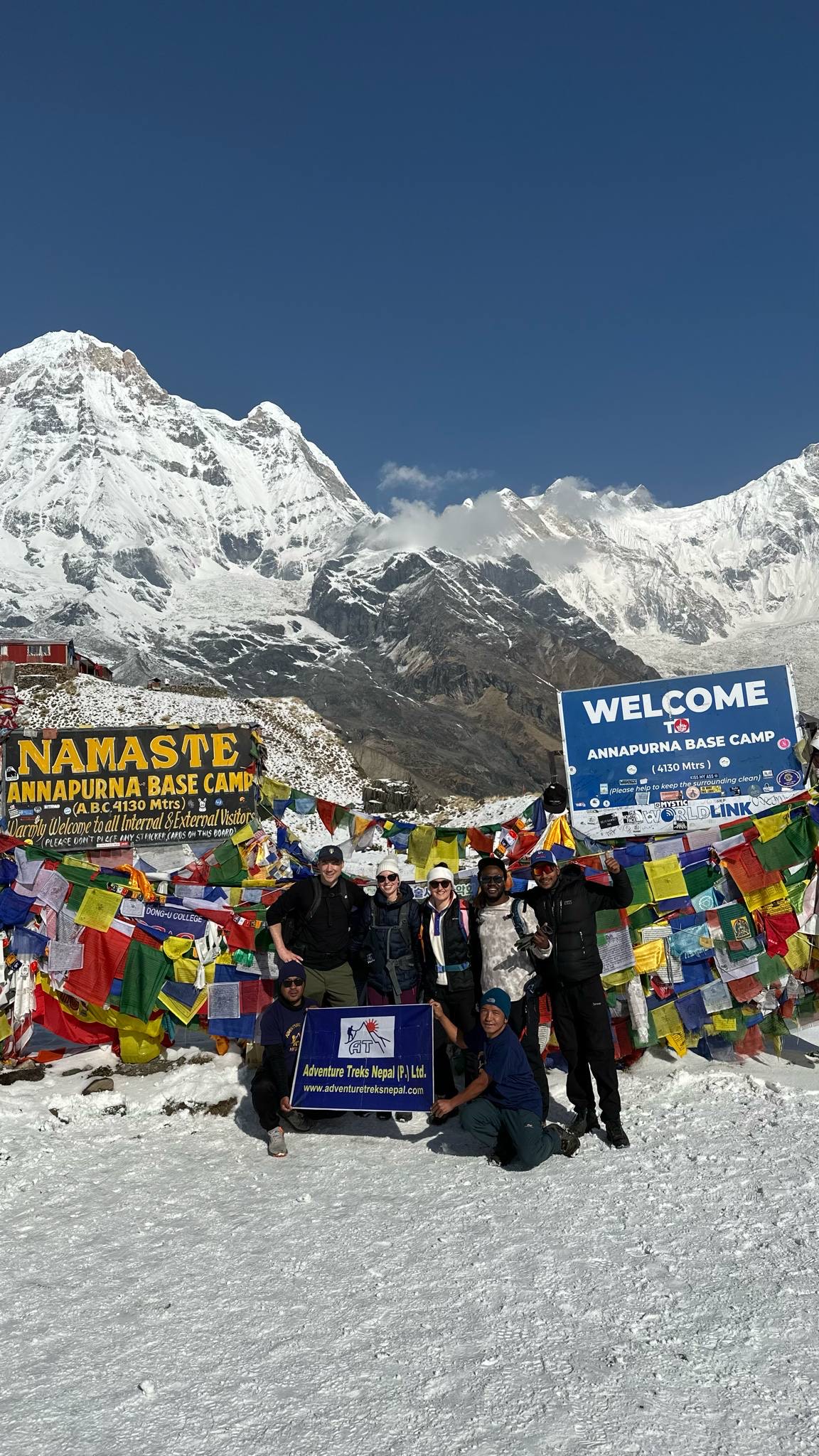
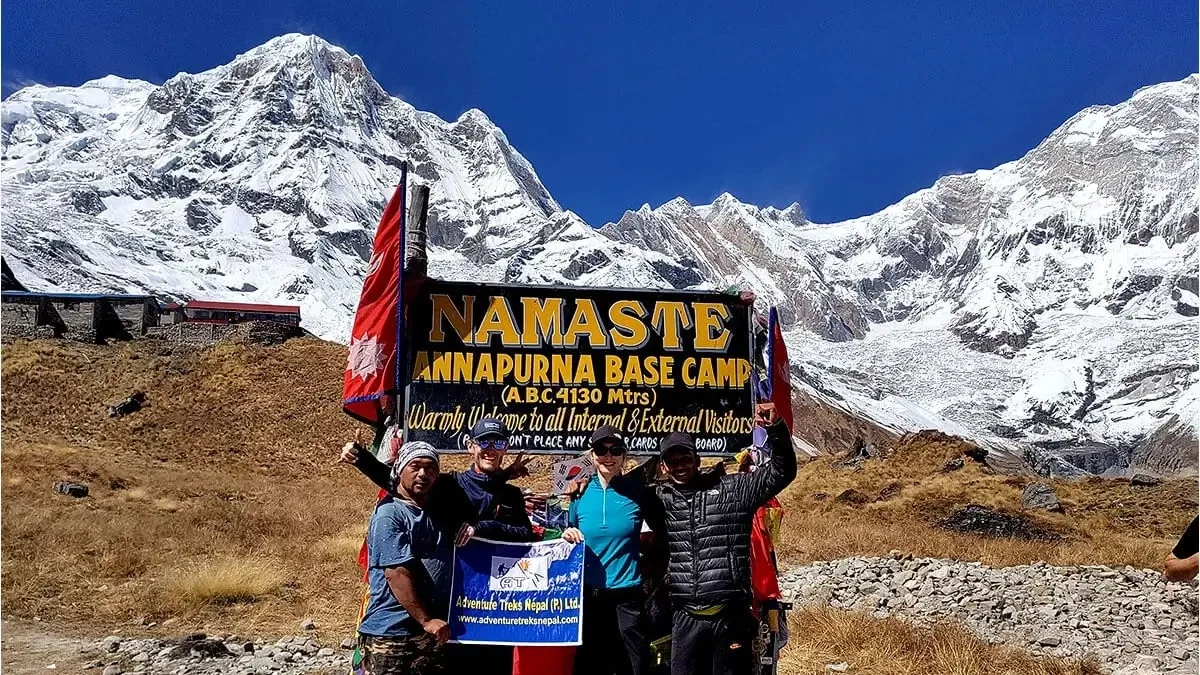
As your dream comes true on the day, you will forget every pain in your body caused by walking through diverse landmarks. Savor the charm of the surroundings, encompassed by towering, snow-clad mountains. Take some pictures in a dramatic background for lifetime memories. To avoid the difficulty of unpredictable weather, the journey usually begins very early in the morning after a hearty breakfast. 

  • Max Altitude: 4,130m / 13,550 ft.
  • Meals: Breakfast, Lunch and Dinner
  • Accommodation: Tea House
  • Duration: 2 - 3 Hours.

Once you have enjoyed the mindblowing scenes of the sunrise over the Himalayas, head down to Bamboo, using the same trail that you used to reach the base camp. Waving your hands to the serene environs, decorated with fluttering prayer flags, you will keep walking with easier descents than the previous challenging climbs.

Enjoy retracing footsteps back to Bamboo with memories of spending a valuable period at the base camp. If your stamina favors, you can proceed to Sinuwa, which is less crowded and a perfect destination for resting and taking a bath at hot springs, as most travellers pause at Bamboo.

  • Max Altitude: 2,340m / 7,677 ft.
  • Meals: Breakfast, Lunch and Dinner
  • Accommodation: Tea House
  • Duration: 7 - 8 Hours.

Begin the day trek towards Jhinu Danda, a serene village usually known for its natural springs, after having a tasty breakfast. In the first session, the trail takes you to Kuldighar (2570 m) with ascending paths and then gradually descends to Chhomrong Khola. From here, continuing to walk on steep stone steps via wonderful forests and small villages, you will reach Jhinu Danda.

Although this trek includes both ascents and descents, a cool atmosphere along with terraced fields and high hills will refresh you. Once you check into the teahouse, you can get relief from pain by dipping into natural hot springs, which are located a short distance away from the village. 

  • Max Altitude: 1,760m / 5,776 ft.
  • Meals: Breakfast, Lunch and Dinner
  • Accommodation: Tea House
  • Duration: 4 - 5 Hours.

You will make your way towards a small village of Potana, located at an altitude of 1890 m. Although the trek is quite long, the trail is fairly easy, crossing New Bridge, Landruk, Bhedikharka, and Deurali. As you reach the destination, quiet environs with great scenery welcome you for tonight. Since the place is famous for sunrise and sunset views over the Annapurna and Dhaulagiri ranges, do not miss the event in the evening and the next morning. 

  • Max Altitude: 1,890m / 6,200 ft.
  • Meals: Breakfast
  • Accommodation: Tea House
  • Duration: 7 - 8 Hours.

As you will drive back to Pokhara on this day, the trekking duration will be shorter than the day before. After having breakfast at Potana, you will begin the trip, walking towards Dhampus, from where the trail becomes quite challenging with more steep descents until Phedi. At Phedi, our private vehicle waits for you to drive back to Pokhara, observing the scenery. After checking into the hotel, take a rest for a while, and stroll around the lakeside as the marvelous sunset creates an eye-catching environment.

  • Max Altitude: 970 / 3182 ft.
  • Meals: Breakfast
  • Accommodation: Hotel
  • Duration: 3 - 4 Hours.

With the excitement to get back to the busy cities of the Kathmandu valley to enjoy advanced facilities and modern technologies, wake up early in the morning and get ready. You arrive 1 or 2 hours earlier than the departure of the flight schedule at the airport. Flights with aerial views will take you to Kathmandu within 25 to 30 minutes. 

Feeling more relaxed by flying over valleys, fields, hills, and forests, you will land at Tribhuvan International Airport and be shifted to a hotel to unwind. In the afternoon and evening, as you have a leisure period, you can also explore some places, including bustling markets like Thamel, Asan, Patan Durbar area, and Bouddha area to buy souvenirs, as you will head to your homeland the next day. 

  • Max Altitude: 1,330m / 4,365 ft.
  • Meals: Breakfast
  • Duration: 25-30 min

The journey teaches you many lessons, including surviving being far from modern amenities in high-altitude mountainous landscapes where the network is weak and facilities are limited. With a lifetime memory, you will reach Tribhuvan International Airport, as our team will drop you off there 2 or 3 hours earlier than the scheduled flight. 

  • Meals: Breakfast
  • Duration: 30-45 min
Unable to locate what you're seeking?

Reach out to our travel experts.

Cost Details
Included
  • Arrival and Departure Transport.
  • Accommodation in Kathmandu (Twin Sharing) and Pokhara with breakfast.
  • Sightseeing tour with entrance fee.
  • Trekking Duffel Bag.
  • Breakfast, Lunch & Dinner during the Trekking.
  • Accommodation in a teahouse during the trekking.
  • Kathmandu-Pokhara Drive.
  • Pokhara-Kathmandu Flight.
  • Pokhara Nayapul Transport.
  • Jhinu Pokhara Transport.
  • Trekking Porter with Insurance. (We Provide 01 Porter for 02 Pax).
  • Trekking Guide with insurance.
  • Trekking guide and porter's food and accommodation, wages, etc.
  • First Aid kit.
  • Annapurna Base Camp Trekking Region map.
  • Price based on min. pax.
  • Annapurna Conservation Area Project (ACAP) entry permit fee.
  • Trekker’s Information Management System (TIMS).
  • Water purification tablets.
  • All Government taxes.
  • Office service charge.
Excluded
  • International Airfare.
  • Your travel insurance of any kind
  • Nepal entry Visa fee (US$ 30 for 15 days and US$ 50 for 30 days; you should get visa upon your arrival)
  • Drinks, Dessert, Juice, Mineral Water, Heater charge, Hot Shower during the Trekking and main meals in cities.
  • Tips for Guide, Porter and driver.
  • Sleeping Bags (-20C), Down Jacket.
Route Map
Annapurna Base Camp Trek - 16 Days
Altitude Chart
Annapurna Base Camp Trek - 16 Days
Dates and Availability
Select a Departure Month
Departure Dates
Status
Price


Essential Information

What is the best time to trek to the Annapurna Base Camp? 

Trekking to the Annapurna Base Camp is easier in any season due to the well-marked trails compared to the similar route to the Everest Base Camp (5364 m). However, spring (March to May) and autumn (September to November) are the best times of the year because they avoid the heavy rains of the monsoon and the snowfalls of winter. Along with moderate temperatures and more comfortable, dry trails, festive activities add enjoyment to the peak seasons since national occasions such as Dashain, Tihar, and Chhath fall during these optimal months. 

In the temptation of a discount on the package, selecting to embark on the ABC trek during the months of the rainy seasons increases risks of flood and landslide,  while trekking in winter also exposes you to avalanches, extreme cold, and weather-related challenges. As a result, ensure safety by trekking only during the appropriate time that does not create issues like obstructed vistas of the mountains because of rain, fog, and clouds.

What trekking permits are essential for the Annapurna Base Camp trek in comfort?  

Trekking permits are not only crucial to complete the legal process for travelling in the trekking areas of Nepal, but also guarantee full security, as the authorities collect your personal details along with the full itinerary of your trip. Major official documents for the 16 days Annapurna Base Camp trek are a TIMS (Trekkers Information Management System) card and an ACAP (Annapurna Conservation Area Project) permit. On your behalf, our representative from Adventure Treks Nepal will do the processing before venturing into the trek, since you have to verify such papers at different checkpoints. 

How difficult is the Annapurna Base Camp trek 2026?

The Annapurna Base Camp trek of 16 days is generally considered easy to moderate, based on factors such as terrain, trail conditions, elevation, daily walking hours, distance, and the trek's duration. Spending more days in remote settlements, far from modern technology and advanced facilities, might sometimes make you feel bored due to limited services. A trekker with good physical fitness and a strong mindset can comfortably complete this journey, despite its steep ascents and descents, forested trails, and numerous suspension bridges.

To sum up, prepare well to trek on the Annapurna trails without additional physical and psychological effort, although the trip does not require technical skills or mountaineering skills. If you choose us for your dream, we will guide you to successful completion, as we have a history of conducting the trek, including juniors and seniors with no prior experience. Since the trek takes you above 2500 m, the possibility of altitude sickness occurring in you requires caution while heading to higher elevations. 

Symptoms of altitude sickness: Sleeping dificulty, nausea, dizziness, loss of appetite, fatigue, weakness, and shortness of breath etc. 

Why do you need travel insurance for the Annapurna Base Camp trek 16 days?  

Travel insurance is often obtained for self-satisfaction during travel, especially at high altitudes at 3000 m above sea level, as it guarantees support during emergencies, including critical health issues and getting injured. Choose the right travel insurance through a reputable company that provides reliable services on time and also covers helicopter evacuation, along with circumstances such as flight delay, journey interruption/cancellation, and personal belongings (equipment) loss/damage. 

The cost for the insurance might be different based on the services provided by the company. We suggest not to compromise on top-notch service to make the trip more budget-friendly. Although you have to pay for the travel insurance out of your pocket, your team helps in choosing the best one for the comfort of the Annapurna Base Camp trek.

Is a guide mandatory for the Annapurna Base Camp trek for kids and seniors?

Yes, an expert, licensed holder guide is compulsory to attain trekking permits for the Annapurna Base Camp trek 2026/2027, according to the Nepal government. A guide plays a crucial role not only in ensuring that travel and tourism rules are properly followed but also in guaranteeing your safety throughout the trek. Guides play a vital role, from navigating strenuous paths to handling any situations on the way. Whether it is about communicating with locals or bargaining on costs with shopkeepers and asking for essential things at teahouses, guides assist you for comfort. Only a seasoned Nepali guide can plan a day of trekking in a better way due to knowledge of local places’ weather patterns, trail conditions, and topography. 


The guide keeps contacting the teahouses’ owners and the trekking team that is returning from the base camp for the exact updates about trails and climates. If the major route to the Annapurna Base Camp becomes inaccessible, only an experienced guide can lead through the best alternative way safely. Novice trekkers often struggle to spot dangerous areas, such as zones prone to landslides or avalanches, and can easily lose their way on unfamiliar trekking paths. Although porters are optional, hiring them can enhance the trip, as they let you walk comfortably, carrying heavy loads of up to 15 kg to 20 kg. Both the porter and the guide help you gain a deeper understanding of the region by explaining the history and traditions of each place in your native language.

How will the accommodation and food be on the Annapurna Base Camp trek in comfort for safety?

 While in the city, you will stay in star hotels in Kathmandu and Pokhara. On the way to the base camp, you will find several lodges ranging from basic to luxurious. However, it’s on you to choose for yourself based on your budget plan and interests. Some people prefer premium services, while others want to experience a simple life while trekking in the Himalayas. Simple teahouses provide common facilities, like shared rooms with twin beds and some basic furniture, but also ensure your comfort and safety. In the advanced one, you can get a private room, an attached bathroom, Wi-Fi, internet, and hot showers, along with a cozy and warm dining hall. 

However, expect simpler teahouses that provide limited services when you reach high settlements like Deurali and Annapurna Base Camp. Having nutritious meals is just as crucial as comfortable sleeping. To become fully energized on the Annapurna Base Camp trek 2026, you will get mainly “Dal and Bhat,” which is a balanced diet. This meal contains steamed rice, lentil soup, seasonal vegetables, salad, and pickle, which is the best combination of carbohydrates, protein, vitamins, and minerals. 

At several hotels or teahouses, you will find Western and Tibetan food, including pizza, sandwiches, pasta, noodles, omelettes, toast, thukpa, chowmein, and Tibetan bread. However, we suggest eating only light meals, which can be digested easily and preserve energy for walking. 

What to pack for the Annapurna Base Camp trek for kids and seniors? 

Packing strategically is also a must-concern aspect during the Annapurna Base Camp trek in comfort to complete 16 days in high altitudes without suffering through many health complications. We recommend packing light while guaranteeing you include all essential gear needed for safe and comfortable trail navigation. For a smooth journey, the following packing essentials can help you the most: 

Clothing and Footwear

  • Base layers (quick-drying, lightweight, moisture-wicking, breathable, and comfortable against the body skin)
  • Mid layers (fleece or down jacket, woollen sweater, insulating trekking pants)  
  • Outer layers (jacket, trousers, gloves, and hat which are breathable, long-lasting, windproof, and waterproof)
  • Durable trekking boots with good grips 
  • Warm socks and slippers

Health and Safety items 

  • First aid kit (including blister, bandage, Diamox, ointment, and personal medicines) 
  • Reusable water bottle, and water purification tablets 
  • Sunscreens, UV rays glasses, and sunhats
  • Trekking poles and 
  • Insect repellent 

Personal hygiene items 

  • Quick-dry towels and wet tissue papers 
  • Biodegradable soap, toothbrush, and toothpaste
  • Lotion 

Essential equipment 

  • Extra sleeping bag with its cover
  • Lightweight, easy-packing blanket 
  • Headlamp with extra batteries
  • Satellite phone 

Others 

  • Smartphone and camera
  • Diaries, journals, comics, storybooks, novels, and games
  • Essential documents (TIMs card, ACAP permits, valid visa, and passport, along with PP-sized photos)

What are the preparation tips for the 16 days Annapurna Base Camp Trek? 

Preparation does not mean only packing just the day before venturing into the wilderness of the Annapurna region. The well-planned trip always becomes successful, as per our previous experiences of more than 30 years. Whether you are a beginner or seasoned professional, physical and mental preparation matters. As a result, decide to reach the base of the Annapurna massif with a forward-looking mindset. When you are mentally ready to face challenges, beginning simple cardiovascular exercise (jogging, short hiking, swimming, cycling, running, jumping, and dancing) is important to prepare your body to be strong enough to tolerate long walking in high altitudes.

However, we provide some tips other than those mentioned above as follows: 

  • Select the months of spring and autumn to trek to the Annapurna Base Camp for comfortable walking and breathtaking scenery. 
  • Choose only a trustworthy trekking agency and a travel insurance company for reliable support, checking clients’ reviews. 
  • Ensure that your guide has sufficient expertise in the necessary sectors of travel and tourism, along with documents. 
  • Share any issues with your guide so that you do not have to suffer through problems for longer. 
  • Keep navigation items (a detailed paper map, a GPS tool, and a direction compass) with you. 
  • Do not separate from your trekking fellows and guide throughout the entire journey. 

Can you extend the Annapurna Base Camp trek by exploring the capital city? 

Yes, you can extend this 16 days Annapurna Base Camp trek in comfort either by exploring the capital city, Kathmandu or doing other activities like mountain flights, bungee jumping, and ziplining also in  Pokhara. Since we prioritize your preferences, our team can manage the schedule based on your interests. Nevertheless, it is necessary to inform us earlier for good preparation. We offer several packages for this region as well as other destinations, and it’s also possible to combine routes if your physical and mental readiness support further exploration.

FAQs

The popular Annapurna Base Camp is situated in the heart of the Annapurna region, within the Gandaki province of Nepal. It lies beneath the south face of Mt. Annapurna (8091 m) at an altitude of 4130 m, inside the Annapurna conservation area. Due to its proximity to the city of Pokhara, some trekkers choose the package that gets activated from there, as it also costs less than starting from Kathmandu. 

The comfort The Annapurna Base Camp trek is a moderate trip in Nepal that includes some challenging sections but is accessible with the proper preparation, regardless of age and fitness level. To avoid possible health problems, start doing exercises before the trekking starts, as you have to walk for 5 to 6 hours on average per day. 

Yes, most lodges or teahouses provide internet, allowing you to stay connected to your family members and loved ones. Nevertheless, the internet becomes weak in remote settlements, especially when the weather changes frequently. Although Wi-Fi is available at many places, you cannot enjoy it in some villages due to weak internet. Therefore, bring a satellite phone to call or send messages from time to time. 

A TIMS (Trekkers Information System Card) and an Annapurna Conservation Area Project permit are essential paper documents for the Annapurna Base Camp trek in comfort. 

Yes, you can fly back to Pokhara from Annapurna Base Camp directly, reducing travel days. However, the cost of a helicopter might be costlier than driving on a road. 

Even though the trail to the Annapurna Base Camp trek route is easier, and it is also possible to do a solo trek for experienced ones, the Nepalese government has no rule of this kind. You must have a guide to obtain trekking permits. Also, hire a local porter to enhance the Himalayan experience. 

The best times to trek to Annapurna Base Camp are spring (March to May) and autumn (September to November). Nevertheless, we have experience in conducting the ABC trek during off-seasons (winter and monsoon) with more caution. 

No, you cannot drink water directly found alongside the trekking route to the Annapurna Base Camp due to risks of health issues like diarrhea, vomiting, and stomach infection. Refill your reusable water bottle from time to time at teahouses, and use a water purification tablet in case the situation arises to drink water from sources like rivers, waterfalls, ponds, and taps. 

Yes, the Annapurna Base Camp is accessible, taking kids and seniors together. Since we have successfully operated groups with children from 9 years of age to 70+, you can plan for this trip with your family, as our team will help you to fulfill it. 

Either in Pokhara or Kathmandu, you can obtain travel insurance for the Annapurna Base Camp trek 16 days. However, you do not have to worry about these papers, as our representative from Adventure Treks Nepal does the processing on your behalf, letting you focus on the preparation.