• Duration 15 Days
  • Trip Grade Moderate

    The moderate grade includes a one-week to fifteen-day itinerary. It can reach up to 4000-5000 meter altitude range, but the trails will be moderate (neither easy nor tough).

  • Country Nepal
  • Maximum Altitude 5320 m
  • Group Size 2-20
  • Starts Kathmandu
  • Ends Kathmandu
  • Activities Trekking
  • Best Time Spring(March to May) and autumn(September to November)

Highlights 

  • Learn historical facts about Nepal through the late king’s palaces, centuries-old architecture, crafts, sculptures, cultural households, and preserved ornaments while in the Kathmandu Valley.
  • A scenic road ride alongside the Trishuli River and then the Marsyangdi River to Beshisahar before beginning the official trek from Bagarchhap.
  • Get a golden opportunity to dive into unique Himalayan cultures and traditions, influenced by Tibetan Buddhism, by exploring the Nar and Phu valleys, untouched by science and modern technologies, preserving ancient Buddhist heritages for centuries.
  • Have more space to explore natural grandness and savor its charm as the route is less explored.
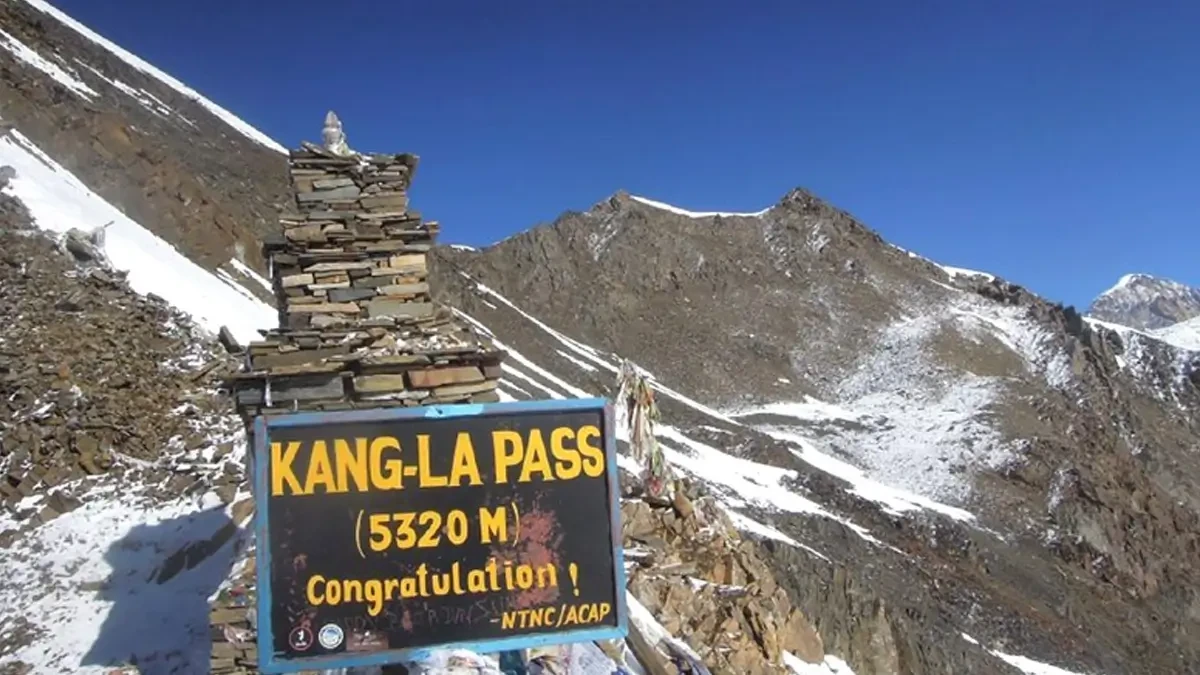
  • Test your physical endurance by crossing the challenging Kang La Pass (5320 m), and enjoy panoramic awe-inspiring sights of the Himalayas, such as Mt. Annapurna South, Annapurna II, Annapurna III, Mt. Manaslu, Gangapurna, Himlung, and Pisang Peak, including sunrises and sunsets.

  • Visit Tashi Lakhang Monastery, located in Phu village, which is one of the highlights, as it is believed to be centuries old and provides deep insight into Tibetan Buddhism.
  • Gain knowledge from nuns while staying in Nar Phedi, an isolated nunnery, as you will observe their activities and rituals of a day.

The 15 days Nar Phu Valley trekking is one of Nepal’s most isolated and off-the-beaten-path routes, located in the northern parts of the Annapurna region, between the famous Annapurna Circuit and Manaslu trekking trails. Pristine landmarks present the surreal charm of nature, along with rich cultures that have been preserved for centuries, which were only opened to trekkers in 2003. At every step of this restricted area, which ranges from 3700 m to 5320 m, both rewards and challenges appear, making it a once-in-a-lifetime trip. The paths to Kang La Pass test the trekker’s stamina and mental resilience, as these sections will be more strenuous than others. 

Trails adorned with rhododendrons, ancient monasteries, and gompas provide spiritual satisfaction, also relieving physical pains caused by struggling to reach distinct destinations. A major sacred place on the route is Tashi Lhakhang Monastery, where you can observe rituals of locals and monks practicing Tibetan Buddhism by blending Nyingma and Kagyu traditions. It is also believed that you get blessings from Guru Rinpoche by offering prayers at the monastery and paying respects.

What to expect on the Nar Phu Valley trekking in 2026?

Even though the trails to two close Nar and Phu villages are easier than most commercial Annapurna Base Camp  and  Everest Base Camp treks, trekkers have explored them less. If you love serenity and fewer crowds, 15 days of Nar Phu Valley trekking can be ideal for you. Whether you are a beginner or an expert, you can deal with the circumstances by following our guidance for proper preparation. The following are wonderful things that await you in the Nar Phu Valley trekking areas: 

Stunning vistas of mountains from distinct vantage points 

As you leave Beshisahar, beginning the official trekking, nature starts showcasing breathtaking scenery. Although the glimpses of mountain ranges appear as you reach Bagarchhap, the scenes become more alive and majestic while spending time around Kotho, Meta, and Kyang. As the Narphu Valley is surrounded by snow-clad peaks, allowing you to capture photographs in such a dramatic background. 

The most anticipated moment is standing at Kang La Pass (5320 m), the highest point of the trek, enjoying expansive 360-degree vistas of Annapurna South, Annapurna II, Annapurna III, Manaslu (8163 m), Dhaulagiri (8167 m), Gangapurna (7445 m), Himlung Himal (7126 m), Tilicho Peak (7134 m), Pisang Peak (6091 m), Lamjung Himal, Khangsar Kang, and Chulu Peak (7485 m). The entire journey through rough terrain, canyons, steep gorges, and shimmering ice flows is worthwhile due to the wonderful scenery.

Unique cultures of Nar and Phu Villages 

‘Nar’ and ‘Phu’ are two distinct villages, situated near each other in the district of Manang, Gandaki Province, in the western part of Nepal. These two settlements of stone houses, dominated by communities of Gurung, Lama, and Ghale, are known as Tibetan villages, as they preserve Tibetan Buddhist culture. Learn their unique Himalayan lifestyle as they live life, enjoying farming, traditional crafting, ironwork, yak herding, and thanka paintings, also handing down their dialect and cultures to new generations. As it is situated near the  Tibetan border, locals strongly follow Tibetan culture and welcome tourists according to their cultural way. 

Wildlife Sighting on the route 

If luck favors you, there is a possibility to spot rare animals such as snow leopards, blue sheep, Himalayan Tahr, and pikas during the Nar Phu Valley trekking as you pass through dense woodlands. As we depend on sustainable tourism, do not harm any living things. Staying far from wildlife, you can observe their different activities via binoculars as well as capture them on your camera roll. Several birds, including Himalayan monals, griffon vultures, red-billed blue magpie, himalayan bulbul. The Annapurna Conservation Area Project preserves them, and they get funds collected from our ACAP permits. 

Why is the Nar Phu Valley Trekking itinerary the best? 

Our itineraries for various packages are tailored, considering all levels of trekkers for a smooth journey. Similarly, the Nar Phu Valley trekking itinerary is also ideal for those seeking a challenging and rewarding walk on one of the off-the-beaten trekking paths due to its duration and total trekking distances, along with the average length to cover during these 15 days. The itinerary does not only focus on the physical itinerary but also lets all trekkers enjoy and immerse themselves in unique cultures. Activating the package after you land in Kathmandu, the itinerary lets you refresh before heading to remote areas. From the starting to the ending of the trip, you gradually proceed ahead to destinations without rush, allowing you to adapt to the environment naturally. As a result, this itinerary of 15 days can be the best among others for exploring the restricted area. 

Is Nar Phu Valley Trekking suitable for you? 

Being less-crowded trails in the Annapurna trekking areas, trekkers can have more space to explore without any disturbance. But is the Nar Phu Valley trekking doable with no prior experience? Generally, this kind of question often arises while planning a trip. You must skip some journeys, although you really want to go, due to your health and safety concerns. While talking about the Nar Phu Valley Trekking, the odyssey suits trekkers who are physically fit and mentally sound with experience walking in high-elevation terrain, as the trek takes you above 5000 m. 

Adventurers who love to explore authentic Tibetan cultures, untouched by modern science and technologies, this trip can be ideal, as you will find remote villages alongside high hills and canyons, spending time in the mountain lifestyle with their own faith and beliefs. Since only determined trekkers, ready to tackle obstacles with proper preparation, can complete the Nar Phu Valley trekking, it may be challenging for novice trekkers or those looking for a comfortable trip that suits a family. If you follow our Nar Phu Valley trekking guide, the journey becomes easier than you think. Accordingly, gain essential information, and contact us on Whatsapp or do email for inquiries. 

How much does the 15 days Nar Phu Valley Trekking cost? 

The cost for this trip to the Nar and Phu villages within 15 days depends on the chosen itinerary and services. If you are on a budget-friendly trek, you can also shorten the trip based on your choice, as the longer the days in such remote areas, the more the cost for the trip. In Nepal you will find trekking companies such as local, national, and international. While comparing these, the package from international might be costlier based on the services they provide. In lower elevations, the price for things is normal, but you have to pay more than the normal price due to difficult access to transportation, adding much to the total cost of the trek. 

If you are in a group, the price for the Nar Phu Valley trekking might be lower than trekking alone. As a result, hire a guide and a porter in a group to divide the price for them.  Do not compromise on matters of health and security in temptation of discounts on packages, as some trekking companies give discounts on treks during the off-seasons (monsoon and winter). At last, you find the Nar Phu Valley trekking cost more affordable compared to other off-the-beaten-path treks such as the Manaslu Circuit Trek and the Kanchenjunga Circuit Trek.

Why choose us for the Nar Phu Valley Trekking 2026/2027? 

Adventure Treks Nepal is a crew of expert travelers, serving quality facilities for both local and international tourists during the odysseys for more than three decades. We have been successful in building trust among all types of trekkers regardless of fitness level and age, organizing treks in different countries like Nepal, Bhutan, and Tibet with smooth itineraries at affordable costs. Each of our team members is experienced and ensures your safety and well-being without compromising the experience. If you choose us for the 15 days Nar Phu Valley trekking, we will satisfy you based on your preferences, as all our packages’ itineraries are customizable.

Being a trustworthy trekking agency, registered with the Nepalese government and associated with the TAAN (Trekking Agencies Association of Nepal) as well as with the Nepal Mountaineering Association, our responsibility is to arrange all trekking logistics in a strategic way without letting you stress unnecessarily. Respecting individual goals and comfort, our team cooperates with you and helps throughout the trip. To make your preparation easier, we not only help in obtaining permits but also provide some trekking equipment as well as fully help in the booking process. However, our booking process is easier, and our team responds to you immediately in case of help. If you check our previous clients’ reviews, you will find that we are providing quality services, and we have positive responses for our reliable work. 

Itinerary

 If the provided itinerary does not meet your needs, we can design individualized travel plans based on your preferences.

Trip Plan
Expand allCollapse all

With an aerial view of the valleys, land at Tribhuvan International Airport, where our representative from Adventure Treks Nepal welcomes you as the package for the Nar Phu Valley trekking is activated. After all these, our team transfers you to the hotel in Thamel, a bustling bazaar, usually known as a major tourist hub of the capital city. 

After taking a rest for a while, stroll around the markets before the briefing sessions, where you will have guidance from your guide regarding the trek. You can ask questions if you have any doubts. 

  • Max Altitude: 1338 m
  • Accommodation: Hotel
  • Duration: 25 to 30 minutes drive

On this day, we ensure that all required official documents and trekking logistics are arranged, letting you explore Kathmandu Valley. However, you can also rest to refresh from extensive international travel. At the last minute before heading to remote areas of Nar Phu Valley, check the crucial equipment, and also exchange currency. 

The day is not only for rest but also for adaptation to the environment of Nepal. Enjoy discovering World Heritage Sites such as Pashupatinath, Boudhanath, Swayambhunath, and Durbar Square for more knowledge about Nepal and its history.

  • Max Altitude: 1338 m
  • Meals: Breakfast
  • Accommodation: Hotel

Early in the morning, head towards Besisahar following the Trishuli and then the Marshyangdi rivers. Within 5 to 6 hours, you will have to change vehicles for Bagarchhap, a village with a smaller population. Further ahead, covering 53.5 km of the Besisahar-Chame Sadak route, you will finally reach the day’s destination within 2.5 to  3 hours, traversing Bahun Danda, Ghermu, Jagat, Tal, and Thonje. 

Although some people shifted to Danakyu, to the west of Bagarchhap, after a landslide took place in 1995, killing 11 villagers and 9 trekkers, several are still dedicated to serving tourists by running teahouses. Trekkers on the Annapurna Circuit Trek and Nar Phu Valley Trek often love to pause at this village due to basic but reliable accommodation and meals, as well as for proper altitude acclimatization. 

  • Max Altitude: 2160 m
  • Meals: Breakfast, Lunch, and Dinner
  • Accommodation: Teahouse
  • Duration: 9-10 hours

Wake up early in the morning with the excitement of starting the trek to the Nar Phu Valley. Crossing settlements such as Danakyu, Chame, Syang, Dharapani, and Timang via forests filled with pines and rhododendrons, reach Koto. Although this village is relatively small, you will find several teahouses and lodges for comfortable stays. 

  • Max Altitude: 2670 m
  • Meals: Breakfast, Lunch, and Dinner
  • Accommodation: Teahouse
  • Duration: 4-5 hours

The journey becomes quite demanding but enjoyable, walking through lush woodlands, quaint settlements, and suspension bridges over Nar Khola. Since the restricted area starts from Koto, you have to verify the restricted area permit for further trekking to Meta, gaining an altitude of approximately 890 m. 

During this section of the Nar Phu Valley trekking, you are treated to the Himalayas, such as Lamjung Himal and Annapurna II. As you are entering the Nar Phu Valley, you will see the transformation of landmarks from lush forests to alpine meadows and more rugged terrain. At the final stretch, the steep and challenging trail tests your physical endurance near Meta. 

  • Max Altitude: 3560 m
  • Meals: Breakfast, Lunch, and Dinner
  • Accommodation: Teahouse
  • Duration: 7-8 hours

After a hearty breakfast, leave the village of Meta to reach Kyang, a winter pasture settlement for the inhabitants of Phu village. With several ascents and descents, cross by glacial moraines, stupas, chortens, and small hamlets to reach the destination. On the way, you are also treated to amazing vistas of snow-clad mountains like Annapurna II, Pisang Peak, Tilje Peak, and Gyaji Kang. Deep gorges and arid landscapes remind you of Mustang. In Kyang, you will get warm and clean teahouses for an overnight stay. 

  • Max Altitude: 3,800m
  • Meals: Breakfast, Lunch, and Dinner
  • Accommodation: Teahouse
  • Duration: 04-05 Hrs

Although today’s journey is shorter, you need more caution as the landscape begins transforming into more rugged, narrower, and steeper terrain. In this section, you often cross Phu Khola via suspension bridges and walk through dense forests and finally reach Phu village after walking for 3 to 4 hours from Kyang. Situated at an elevation of 4080 m, this beautiful village showcases ancient Tibetan-influenced cultural heritages. Here, you will find the environment more peaceful and houses made of stone with narrow alleys. This place is also known as the centuries-old Tashi Lhakhang Monastery, which is believed to be one of the oldest monasteries in the Annapurna region.

  • Max Altitude: 4,080m
  • Meals: Breakfast, Lunch, and Dinner
  • Accommodation: Teahouse
  • Duration: 03-04 Hrs

As your body requires rest after covering the long length of diverse landmarks, you will take a rest at Phu village. On this day, you can either take a rest by staying home or explore the village for a deep insight into local cultures. While pausing here, you will be physically and mentally prepared to continue ahead, especially for Nar Pass and Kang La Pass. From different vantage points, enjoy extensive views of mountains, and also observe the Tibetan border, instead of sleeping all the time, allowing yourself to adjust to the atmosphere naturally. 

  • Max Altitude: 4,080m
  • Meals: Breakfast, Lunch, and Dinner
  • Accommodation: Teahouse

As you finish having delicious local food as breakfast, you will proceed towards Nar Phedi, leaving Nar village. In the first section, the trail will take you to the Phu khola with descents. While enjoying awe-inspiring scenery, walking alongside the mani walls, alpine meadows, and sandy riverbeds adds to the enjoyment. When you reach the day’s destination, a kind of peace stirs your feelings due to the cool atmosphere along with the sacred sites.

Located at the base of Nar village, this wonderful settlement offers tourists the opportunity to learn about Buddhist nuns, as it is a dwelling for an isolated nunnery. When you reach there, you also get welcomed by them according to their traditions, allowing you to know about their cultures. Generally, they welcome with common vegan meals together with sacred rites. Due to comfortable teahouses and rich cultures in this remote terrain, tourists love to spend a night here.

  • Max Altitude: 3,545m
  • Meals: Breakfast, Lunch, and Dinner
  • Accommodation: Teahouse
  • Duration: 06-07 hours

Waking up early in the morning in a serene nunnery environment, start the journey on ascending trails via steep topography towards Nar village. Before climbing to this village, you can also observe the morning activities of nuns, as they are involved in morning prayer and chanting, where you can also participate. When you continuously walk with gradual ascents, admiring chortens, mani walls, and the wide-ranging views of surrounding mountains and cliffs, you forget the struggles that come with such challenging landscapes. 

Following well-marked trails adorned with colorful chortens and gates, reach the village of Nar, a lively settlement where the stone dwellings in a cluster make it more attractive. Also here, you will be welcomed with a delightful face in their traditional way. 

  • Max Altitude: 4,200m
  • Meals: Breakfast, Lunch, and Dinner
  • Accommodation: Teahouse
  • Duration: 03-04 hours

On this day, you will experience both rewards and challenges, as today the trail traverses Kang La Pass (5320 m), offering you the most wonderful vistas of the trek. As the trekking length is more than before, taking 8 to 9 hours, wake up before sunrise, and make your way towards Nwagal, a notable settlement for authentic Himalayan cultures, influenced by Tibetan Buddhism, like Nar, Phu, and Upper Mustang.

The highlight of this session is mesmerizing views of towering peaks such as Gangapurna, Annapurna II, Pisang Peak, and Tilicho Peak while savoring the charm of nature from an environment decorated with prayer flags. After spending a valuable period here at the top, the descending path leads you to Nwagal, where cozy teahouses are available along with great scenes of the Marshyandi river valley. 

  • Max Altitude: 5,320m
  • Meals: Breakfast, Lunch, and Dinner
  • Accommodation: Teahouse
  • Duration: 08-09 hours

As you conclude official trekking at Nwagal, a thrilling drive takes you to Besisahar by local or private jeep. Taking memories of the Himalayas with you,  a 4WD of 5 to 6 hours gives you enjoyment through the breathtaking scenery. After checking into the hotel, take a rest to get relief from body pains due to walking for long days. In Beshisahar, you can enjoy all kinds of modern services that are missing in remote areas of the trekking areas. 

  • Max Altitude: 760 m
  • Meals: Breakfast, Lunch, and Dinner
  • Accommodation: Teahouse
  • Duration: 05-06hours

Once following the Marshyangdi and Trishuli rivers, drive back to the capital city of Nepal, traversing Dumre Bazar, Muglin, Malekhu, and Dharke. When you arrive at Kathmandu, our team member will transfer you to the hotel for the night. 

  • Max Altitude: 1338 m
  • Meals: Breakfast and Lunch
  • Accommodation: Hotel
  • Duration: 05-06 hours

Before heading to the homeland, you will have a free day in Kathmandu, letting you acclimatize properly and heal pains from walking. However, you can also discover the Kathmandu valley in places missed last time. Buy souvenirs for your loved ones as a memory of the Himalayan country for a lifetime. In the evening, attend our farewell dinner, an exchange of experiences in such unspoiled nature.

  • Max Altitude: 1338 m
  • Accommodation: Hotel

After you get ready, our team will shift you to the Tribhuvan International Airport as you are going to your own country leaving towering mountains and lush valleys behind. Since it takes some time to get a boarding pass, a representative from Adventure Treks Nepal leaves you there 2 or 3 hours before the scheduled flight. 

  • Meals: Breakfast
  • Duration: 25-30 minutes
Unable to locate what you're seeking?

Reach out to our travel experts.

Essential Information

What is the best time to visit the Nar Phu Valley?

Due to the remoteness and lightly marked trails of the Narphu Valley Trek, concern about the weather is crucial. Although permits are available in all seasons, spring (March to May) and autumn (September to November) are optimal periods of the year to explore this restricted area of the Annapurna region. The destination is also popular for the monsoon since it lies in the rainshadow region, and the chance of enjoyment is similar to other times. As trekking during the months of peak seasons ensures safety and comfort, most trekkers avoid trips in harsh cold and monsoon periods. 

However, reaching the initial point of official trekking might be challenging during rainy seasons due to muddy trails and weak visibility, as most parts of Nepal bring heavy rains. In spring, not only does the climate favor you, but you are also treated to the most breathtaking scenery without obstruction, offering you a once-in-a-lifetime experience. Blooming flowers and glimpses of rare animals, along with some festive vibes, make the spring season the most suitable period for the Nar Phu Valley Trekking 16 days.

Another pleasant period, autumn also falls under trekkers’ choice due to similar temperature, which also brings a vibrant national festival ambience. Tourists can also get involved in the occasion’s activities and learn cultural rituals. During the winter, temperautre drops, sometime to freezing, increasing risks of cold-related problems such as frostbite, and hyperthermia. As a result, we suggest to trek only peak seasons, ensuring safety and comfortability. 

What type of accommodation and food are available for the Nar Phu Valley Trekking?

In city areas such as Kathmandu and Pokhara, we provide star hotels that offer premium services along with hot showers, private washrooms, and various types of food (Tibetan, Western, and Nepalese) based on your preferences and taste. However, you will find comfortable and perfect mountain teahouses in remote areas of the Nar Phu Valley trek due to difficult access to transportation. While in lower elevations, you get more facilitated rooms than in the high settlements of Nar and Phu Villages. Although accommodations are simple, owners provide good hospitality to satisfy you, together with fresh and hot meals. Basically, you can expect a common room with a twin bed, pillows, and a blanket; shared bathrooms; and weak internet service in isolated areas. 

Generally, you will be served “Dal and Bhat,” which is a perfect combination of minerals, vitamins, proteins, and carbohydrates as it includes steamed rice, seasonal vegetables, lentil soup, pickle, and salad. Although you get Western and Tibetan items such as Pizza, omelettes, fried rice, pasta, chowmein, and thukpa at some restaurants, we suggest avoiding oily and heavy food at high altitudes, which takes time to digest, consumes your energy and leads you to early hunger or exhaustion. As hot drinks, you might find butter tea, black tea, powder coffee, milk tea, and ginger tea. Since shops are fewer with limited things, carry some snacks to boost yourself up, including dry fruits, nuts, cookies, biscuits, beaten rice, instant noodles, chocolates, energy bars, and energy drinks.

Why do you need travel insurance for the Nar Phu Valley Trekking? 

Travel insurance plays a key role in saving you from budget overruns in case of trip cancellation, injuries, accidents, or other health issues related to altitude. While obtaining the insurance from the right company, it also covers emergency helicopter evacuation above 3000 m, along with all expenses of hospitals. As the Nar Phu Valley Trekking route is also challenging and the settlements have health posts with limited services, the insurance saves your money for treatment, reducing unnecessary stress. 

With the right trekking insurance, you can complete a trip of 15 days confidently because of assurance for both well-being and financial security, as this action is the best safe option to save thousands of dollars for a helicopter evacuation. If you lose any trekking gear or it gets damaged while walking on demanding topography features or in inconsistent weather patterns, the insurance covers the expenses for it too. Grab the best insurance from a trustworthy company, and only focus on enjoying the pristine wilderness of the Annapurna region.

What permits does the Nar Phu Valley Trekking require?

Trekking like in the Annapurna circuit route, you need to obtain a restricted area permit along with a TIMS (Trekkers Information Management System) card and an Annapurna Conservation Area Project permit while entering the Nar Phu Valley due to security matters, as it lies near the Tibetan border. Without such legal documents, you can not embark on this trip of 15 days. If you disobey the Nepalese government regarding tourism, you have to pay a penalty. A reputable trekking agency processes all these paper documents on your behalf, either in Pokhara or Kathmandu, before the trek starts. The price for permits may depend on trekking seasons and group size. If you are a citizen of SAARC, you might get a discount on the ACAP permits. 

These permits are not only for legal matters but also for a secure journey because administrations like the Nepal Tourism Board collect all your personal details together with the detailed itinerary to track you throughout the trek in order to provide an instant rescue team in case of unpredictable circumstances at high elevations. 

Note: You must have a licensed guide to obtain trekking permits along with photocopies of your passport, a valid Nepalese visa, a detailed itinerary, and some passport-size photos. 

How difficult is the Nar Phu Valley Trek 2025? 

While walking on the uneven terrain at an elevated altitude with steep ascents and descents for a prolonged period, a trekker obviously feels quite tired on any Himalayan trip, as on the Narphu Valley trekking. However, this 15-day trek to the Narphu Valley is usually considered moderate to challenging, making it suitable for those with average physical fitness. Our itinerary entails 5-6 hours of walking per day, covering approximately 10 kilometers on average on rough trails, sometimes crossing suspension bridges and risky zones. 

Trekkers also find difficulty while traversing Kang La Pass (5320 m) due to the more challenging sections nearby, which require extra stamina and a sound body, along with good mental condition, as well as prior experience. The possibility of occurring high acute sickness above 2500 m is also a factor in Nar Phu Valley Trekking’s difficulty. An experienced trekker also suffers through its symptoms while ascending uphill without proper acclimatization due to the very low level of oxygen in high altitudes. Unpredictable weather as well as diverse topography also add to its challenge, requiring more caution, a gentle pace, and thorough preparation. However, with our expert team and comprehensive Nar Phu Valley trekking guide makes your trip effective. 

Symptoms of AMS: Headache, sleeping difficulty, nausea, dizziness, vomiting, chest tightness, shortness of breath, loss of appetite

What are the preparation tips for the Nar Phu Valley Trekking 2026?

Preparation for the Himalayan odyssey means not only packing the equipment needed on the trails. Physical and mental preparations are major things to consider before venturing on the journey, especially in trekking areas like Nar Phu Valley due to the rough landscapes. Trekkers can do basic cardiovascular exercises such as jogging, running, cycling, swimming, dancing, and short hiking up to 2000 m to 2500 m to nearby locations to strengthen their leg muscles and prepare their bodies to balance on uneven terrain.

 As the trek includes long-distance walking for many days, start this kind of physical fitness and mental resilience training 1 or 2 months before the trek. Carefully planned trekking via the high alpine pass of Kang La Pass becomes easier. Involving yourself in yoga practice or meditation helps you to proceed on the journey with peace of mind. Some tips for safer Nar Phu Valley trekking are as follows: 

  • Check previous trekkers’ reviews before selecting the trekking agency for reliable logistics and quality services on the trek. 
  • Ensure that you have completed all official documents required for the Nar Phu Valley trekking 2026/2027.
  • Keep drinking plenty of water, and avoid alcohol at high elevations. 
  • Carry essential equipment, clothes, and a first aid kit for security during the entire journey. 
  • Do not separate from your team, and keep in contact with your loved ones. 
  • Buy some energy provider snacks, as you will not find shops everywhere. 
  • Take enough cash along with your ATM card, as once you reach remote settlements of the trekking route, you will not get services to withdraw money anywhere.

What to pack for the Nar Phu Valley Trek 2026/2027?

Ideal checklists for trekking are a major aspect of the trip in the heart of the Annapurna region due to the changeable climates and narrow and rough trails to the Nar Phu Valley trekking for 16 days. From layered systems of clothing to essentials for health and safety, these are must-include things while packing for this odyssey to rainshadow restricted areas. We have provided below crucial things that help you to walk on the route to Nar and Phu villages comfortably. 

Clothes 

  • Carry clothing layers (base, mid, and outer) to maintain body temperature based on various climates. 
  • Avoid cotton, and select synthetic merino wool for the base layer and an insulated layer for the mid and outer layers (waterproof and windproof).
  • Mufflers, gloves, and a warm hat. 

Footwear

  • Durable trekking boots with good grips and ankle support
  • Pair of socks
  • Comfortable sandals or slippers to use while staying at the teahouse and strolling around the village. 

Health and Safety items 

  • First aid kit (including blister, bandage, Diamox, ointment, and personal medicines) 
  • Reusable water bottle, thermos and water purification tablets 
  • Sunscreens, UV rays glasses, and sunhats
  • Trekking poles 
  • Insect repellent 

Individual hygiene essentials 

  • Quick-dry towels and wet tissue papers 
  • Biodegradable soap, toothbrush, and toothpaste
  • Lotion, and lipguard

Essential equipments 

  • Extra sleeping bag with its cover
  • Lightweight, easy-packing blanket 
  • Headlamp with extra batteries
  • Satellite phone 

Others 

  • Smartphone and camera
  • Diaries, journals, comics, storybooks, novels, and games
  • Essential documents (TIMs card, ACAP permits, valid visa, and passport, along with PP-sized photos)

Are you a guide and a porter for the Nar Phu Valley Trek 16 days?

Yes, hiring a licensed guide registered with the Nepalese government is mandatory to trek to any destination in Nepal. Not only to comply with the rules and regulations of travel and tourism, but also for a safer journey, you should step forward by following the guide’s instructions. A seasoned guide with many years of experience and sufficient training is knowledgeable about the local places’ history, weather patterns, trail conditions, teahouses, and local cultures. From assisting in navigating difficult sections to communicating with teahouse owners to fulfil your requirements, the guide always plays a role. 

The guide keeps updated about the weather, checking the forecast as well as the possibility of accessing the destination by contacting guides and teams returning from the Nar Phu Valley for accurate information. If the major route of the trekking gets blocked due to construction or natural disasters such as floods, landslides, or avalanches, the guide leads you through a more secure alternative way. In addition, the guide ensures each trekker’s health conditions and handles the situation, as they have training to deal with problems like AMS. In need of urgent rescue, the guide contacts related administrations for instant service. As a result, imagining any trekking without a guide means increasing risks. 

Choose an experience guide that also helps you in communicating with locals, translating into each other’s languages for better cultural immersion. However, a porter is not compulsory, but we highly recommend both of them to enhance your entire experience. Porters not only carry heavy loads of 15 to 20 kg but also help you in balancing your legs along with your small backpack in strenuous sections. They also provide authentic history about places and ethnic groups’ traditions, as they have many years of experience. 

FAQs

It is not mandatory to give tips to them. However, respecting their vital roles in every aspect of the trek, providing some cash can encourage them to continue their professions in the tourism sector. By doing these kinds of good deeds, you are supporting uplifting the economic condition of locals, as we provide local supporters who have more knowledge of the route.

Yes, you can extend the Nar Phu Valley trekking, as we can provide a longer version of it since it can be combined with the Annapurna Circuit trek route. However, you can also do outdoor activities or day tours in Kathmandu along with mountain flights. 

No, it is not safe to drink water found anywhere, such as in ponds, waterfalls, rivers, streams, and taps, due to the risk of stomach infection or diarrhea. Carry a reusable water bottle to refill water at teahouses, as the best thing to do is to drink only filtered or purified water at high altitudes. If the condition comes from using direct water, use water-purification tablets. 

Yes, you must carry extra money to buy needed things and some food out of your pocket, as you will not get ATM service as you leave city areas. Take more money than you predicted since the price for meals and things is higher in high elevations. 

As the Nar Phu Valley is located near the Tibetan border, a restricted area, you need special permits to explore it. Along with a RAP (Restricted Area Permit), a TIMS (Trekkers Information Management System) card and an ACAP (Annapurna Conservation Area Project) permit are essential.