• Duration 14 Days
  • Trip Grade Moderate

    The moderate grade includes a one-week to fifteen-day itinerary. It can reach up to 4000-5000 meter altitude range, but the trails will be moderate (neither easy nor tough).

  • Country Nepal
  • Maximum Altitude 4130 m
  • Group Size 02-20
  • Starts Kathmandu
  • Ends Kathmandu
  • Activities Trekking
  • Best Time Sep-May

Highlights

  • A golden opportunity to discover the dynamic cities of Pokhara and Kathmandu, which are popular for their rich cultures and natural wonders.
  • Reach the base of Mt. Annapurna (8,091 m), at an elevation of 4,130 m, to savor the beauty of the mountain ranges, valleys, and glaciers. 
  • Explore the distinct cultures of the Gurung and Magar communities in the Himalayas, accompanied by their warm hospitality and traditional Nepalese cuisine. 
  • A wonderful sunrise view over the Himalayas, including Dhaulagiri and Annapurna, from Ghorepani Poon Hill (3,210 m). 
  • Close vistas of snow-covered mountains, including Machhapuchhre, Annapurna I, Annapurna South, Hiunchuli, Nilgiri, and Dhaulagiri, from various vantage points. 
  • Chance to capture the wonderful scenery of a serene environment, full of blooming rhododendrons, and surrounded by cliffs and towering peaks. 
  • Spot endangered wildlife (animals and birds) and vegetation, including leopards, langur monkeys, Himalayan Tahr, blue sheep, lophophorus, eagle,  rhododendrons, oaks, and birches.

Experience the heart of the Annapurna Himalayas with an unforgettable trek to Annapurna Base Camp and a scenic helicopter return!

The 14-Day Annapurna Base Camp Trek with Helicopter Return by Adventure Treks Nepal is an extraordinary Himalayan adventure that combines breathtaking mountain trekking, authentic Nepalese culture, and the excitement of a helicopter flight over some of the world's most spectacular mountain landscapes.

Your journey takes you through charming traditional villages, lush rhododendron forests, cascading waterfalls, terraced farmlands, and beautiful mountain valleys before reaching the spectacular Annapurna Base Camp (4,130m). Surrounded by towering Himalayan giants, including Annapurna I, Machhapuchhre (Fishtail), Hiunchuli, and Annapurna South, you will experience the magic of standing in the heart of the Annapurna Sanctuary.

Along the way, discover the warm hospitality of the Gurung and Magar communities, enjoy peaceful mountain trails, and experience unforgettable sunrises over the Himalayas. The highlight of the adventure is reaching Annapurna Base Camp, where an incredible 360-degree panorama of snow-capped peaks creates memories that last a lifetime.

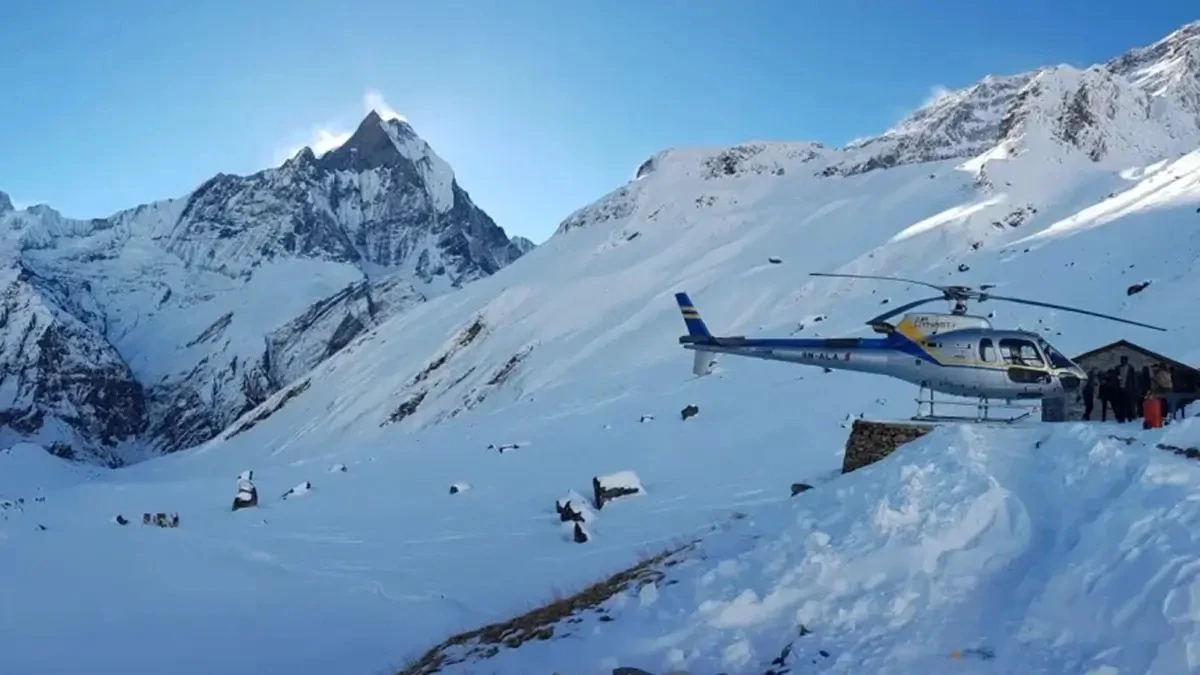
Instead of retracing your trekking route on foot, enjoy a spectacular helicopter flight back from the Annapurna region. Witness breathtaking aerial views of glaciers, deep valleys, alpine landscapes, and majestic Himalayan mountains while saving valuable time and adding an exclusive touch to your adventure.

Designed for adventure seekers who want to experience the best of the Annapurna region in a comfortable and time-efficient way, this trek offers the perfect balance of Himalayan exploration, cultural discovery, and scenic luxury.

With the experienced guides, professional support, and personalized services of Adventure Treks Nepal, you can enjoy a safe, memorable, and rewarding journey into the heart of the Himalayas.

Join Adventure Treks Nepal for the Annapurna Base Camp Trek with Helicopter Return – 14 Days, and turn your Himalayan dream into an unforgettable adventure!

Itinerary
Trip Plan
Expand allCollapse all

Once you arrive at the Tribhuwan International Airport in Kathmandu you will be transferred to the hotel by a representative of Adventure Treks Nepal who will be waiting for your arrival outside the airport. Depending on time of arrival a briefing session will be conducted once you have freshened up. Please let us know if there is anything you would like to do while you are in Nepal.

  • Meals: Null
  • Accommodation: Hotel
  • Duration: 30-40 Minutes
  • Distance: 08 KM

After breakfast in the Hotel we take a scenic flight to Pokhara after your breakfast. The flight offers magnificent views of the Himalayas from the right side of the airplane. After we land in Pokhara, once we arrive in Pokhara we transfer to the Hotel. 

  • Max Altitude: 970 meters
  • Meals: Breakfast
  • Accommodation: Hotel
  • Duration: 25 Minutes

After your breakfast at the hotel in Pokhara we begin our drive to Nayapul which is approximately 40 k.m. from Pokhara. The drive will take around 1 hour 30 min after which we will begin our trek. The first part of the trail takes us to Birethati where we will check in our ACAP permit and TIMS. We then cross the river at Birethati and head left along the gentle slope to Tikhedhunga where we cross the Bhurungdi Khola River on two suspension bridges. After crossing the river we will start the steep climb to Ulleri where we will be spending the night. 

  • Max Altitude: 2020 Meters
  • Meals: Breakfast, Lunch and Dinner
  • Accommodation: Lodge
  • Duration: 06-07 Hours

After breakfast we continue our trek towards Ghorepani through the settlements of Banthati and Nangethati. We also pass a spring inside the forest after Banthati. Crossing the spring by a bridge we continue towards our destination. Occasional views of the peaks give way to a narrower valley, passing through Rhododendron forest then eventually reaching the village of Ghorepani where we spend a night.

  • Max Altitude: 2810 Meters
  • Meals: Breakfast, Lunch and Dinner
  • Accommodation: Lodge
  • Duration: 04-05 Hours

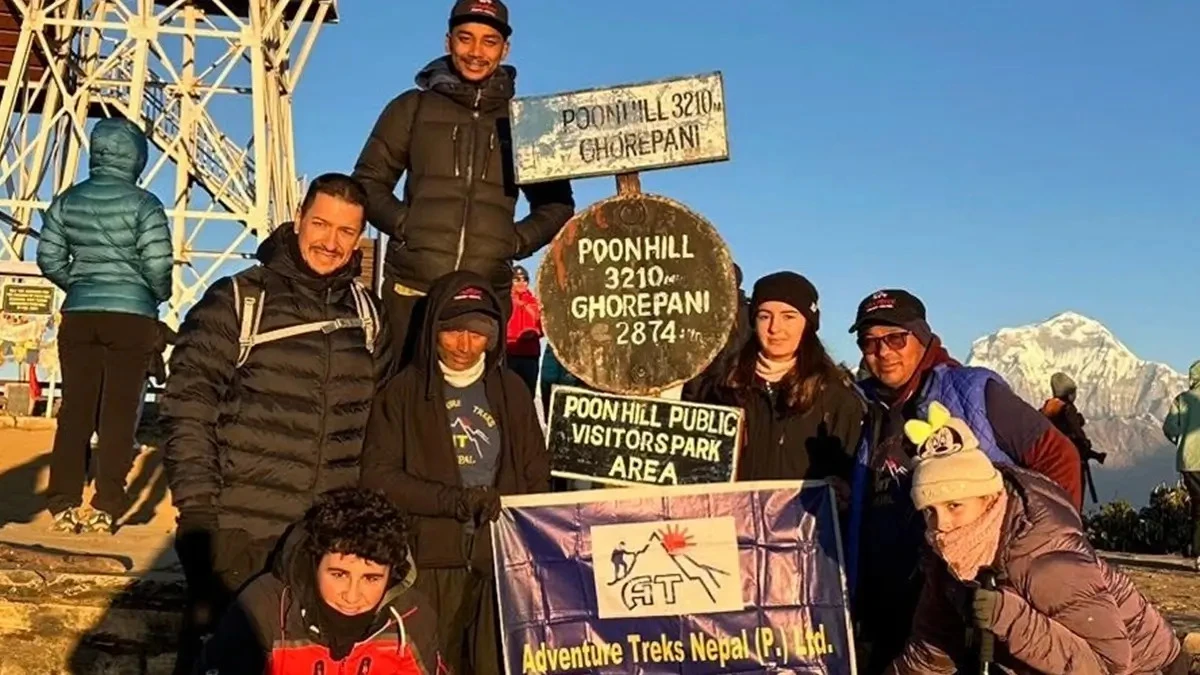
Since you will hike up to Ghorepani Poon Hill station (3210 m), the guide will inform you of the beginning time after checking the forecast time to catch the time of glorious sunrise. Since the view of the sunrise over the Himalayas from here creates the most breathtaking scenery, capture the pictures before returning to the teahouse. The breathtaking vistas of snow-capped mountains such as  Nilgiri, Tukuche Peak, Annapurna South, Dhaulagiri, Annapurna I, Barahi Shikhar, and Machhapuchhre.

We descend to Ghorepani for Breakfast. Rest of the day is Leisure.

  • Max Altitude: 2810 Meters
  • Meals: Breakfast, Lunch and Dinner
  • Duration: 02-03 Hours

After having good 2 days in Ghorepani, Leaving Ghorepani, the ascending trail takes you to Thabala Hill, which offers dramatic scenery of mountains. From here, the trekking becomes quite easier with descending paths to Deurali. Trails lead you towards a river after Banthanti, from where you will again ascend to the village of Tadapani. Taking the left path from here, further walking takes you to Chule. 


  • Max Altitude: 2375 Meters
  • Meals: Breakfast, Lunch and Dinner
  • Accommodation: Lodge
  • Duration: 06-07 Hours

The day begins on a sheer path inside the Rhododendron forests after your breakfast and onto the terraced fields which seems absolutely stunning. We then climb unwaveringly passing exalted waterfalls and cross a suspension bridge. The trail ahead is a fixture of ups and downs finally reaching Chhomrong, our final destination for the day. It is a beautiful village located on the lap of the giant Annapurna massif. Overnight in Chhomrong or Sinuwa

  • Max Altitude: 2170 Meters
  • Meals: Breakfast, Lunch and Dinner
  • Accommodation: Lodge
  • Duration: 04-06 Hours

Leaving Chhomrong the trail descends to cross the Chhomrong Khola on a suspension bridge, then climbs high above the Modi Khola on it's west bank. The trail then ascends through the villages of Tilche and Sinuwa and finally reaches Kuldi at 2350m. From here the trail descends a long, steep stone staircase into bamboo and rhododendron forests and eventually we reach the small settlement of Bamboo at 2340m. After lunch at bamboo The trail continues along the west bank of the Modi Khola valley through dense bamboo forest, occasionally dropping to cross tributary streams, but ascending continuously, and reaches the settlement of Doban at 2630m where there are several good lodges. The trail then continues high above the river to our resting place for the night, the small settlement of tea-houses known as Himalayan Hotel at 2900m.  

  • Max Altitude: 2900 Meters
  • Meals: Breakfast, Lunch and Dinner
  • Accommodation: Lodge
  • Duration: 06-07 Hours

Early in the morning, leaving the Himalayan hotel behind, walk for an hour to reach Hinku cave, a beautiful natural shelter at 3160 m, where people used to stay in the past to be safe from strong storms, heavy rains, and snowfalls. Continuing for an hour from here, you will reach Deurali (3230 m), a key stop for acclimatization before heading to Annapurna Base Camp. However, you will proceed up to the Machhapucchre Base Camp for tonight. After Deurali, trekking becomes quite easier as the valley widens with less steep terrain, making you feel that you are almost very close to the day’s destination. 

You will start seeing the gates to the Annapurna Sanctuary. Continuing towards it, the trail takes you to Bagar, following the Modi Khola river, where the alpine meadows of 3310 attract you the most. From here, proceed up to reach the Machhapuchhre Base Camp (3712 m), where several teahouses serve trekkers. Enjoy the cool environment of the base camp along with the surrounding breathtaking scenery.

  • Max Altitude: 3700 Meters
  • Meals: Breakfast, Lunch and Dinner
  • Accommodation: Lodge
  • Duration: 03-04 Hours

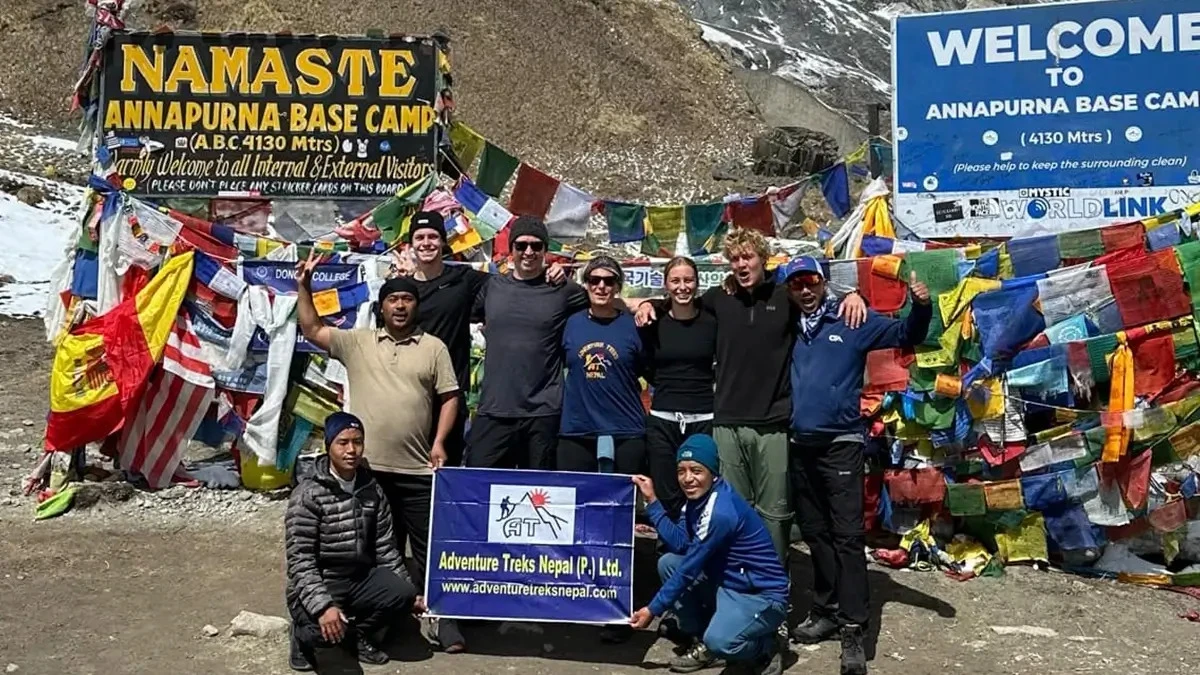
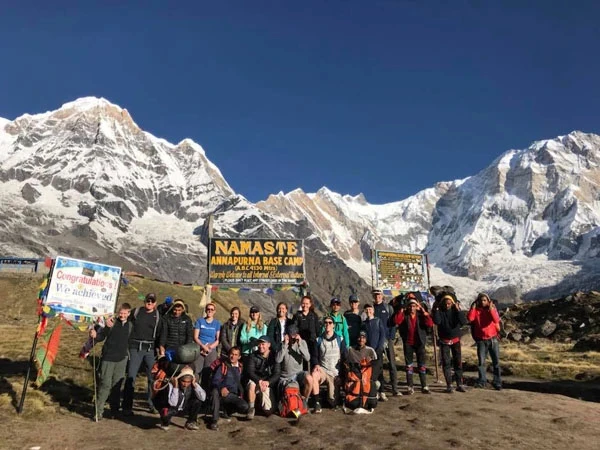
On the 10th day of the comfortable Annapurna Base Camp, it’s just a trek of 2 to 3 hours, but quite strenuous compared to previous ones due to rugged terrain, glacial moraine, and steep ascents. Since it is the major highlight, at the highest point of the trek, you will have a sense of accomplishment and celebrate the moment with your fellow trekkers. Although you find simple but comfortable teahouses with cozy rooms, you can do camping at possible areas around the base camp based on weather conditions. 

As your dream comes true on the day, you will forget every pain in your body caused by walking through diverse landmarks. Savor the charm of the surroundings, encompassed by towering, snow-clad mountains. Take some pictures in a dramatic background for lifetime memories. To avoid the difficulty of unpredictable weather, the journey usually begins very early in the morning after a hearty breakfast

  • Max Altitude: 4130 Meters
  • Meals: Breakfast, Lunch and Dinner
  • Accommodation: Lodge
  • Duration: 02-03 Hours

We will wake up to one of the most amazing sunrises where we will be surrounded by gigantic peaks like Hiuchuli, Annapurna South, Annapurna I, Singha Chuli, Tent Peak, Annapurna III and Machhapuchhre. As the sun rises all these mountain peaks gradually turn golden which is an unforgettable moment for every trekker who treks to Annapurna BAse Camp. After witnessing sunrise and breakfast at the Tea House we will hop on a helicopter and fly to Pokhara. This helicopter flight offers you to have a bird eye view of th Base Camp region one last time before returning back to civilization. 

  • Max Altitude: 970 Meters
  • Meals: Breakfast
  • Accommodation: Hotel
  • Duration: 15-20 Minutes

After breakfast in Pokhara, we have a mountain flight to Kathmandu; it is a thrilling exciting flight over forests, fields and villages with the Himalayas at the background. On arrival, we transfer to the hotel. The remainder of the day is at leisure.

  • Max Altitude: 1338 Meters
  • Meals: Breakfast
  • Accommodation: Hotel
  • Duration: 25Minutes
  • Distance: 200 Kilometers

On this day you will have time to do anything in Kathmandu Valley. There are many tourists’ attractions around Kathmandu like Bhaktapur Durbar Square, Patan Durbar Square which you can visit. You can walk around streets of Thamel for last minute shopping and to have good food. We are happy to offer you some recommendations.

  • Max Altitude: 1338 Meters
  • Meals: Breakfast
  • Accommodation: Hotel

You will be dropped to the Tribhuwan International airport by a representative from Adventure Treks Nepal according to your flight time. Fly back home with memories that last lifetime. 

  • Meals: Breakfast
  • Duration: 30-40 Minutes
  • Distance: 08-09 Kilometers
Unable to locate what you're seeking?

Reach out to our travel experts.

Cost Details
Included
  • Arrival and Departure Transport.
  • Accommodation in Kathmandu (Twin Sharing) with breakfast 4*.
  • Accommodation in Pokhara with (Twin Sharing) breakfast 4*.
  • Trekking Duffel Bag. (Using for Trekking).
  • Breakfast, Lunch & Dinner during the Trekking. (Food as mentioned)
  • Accommodation in a teahouse during the trekking. (Above Chhomrong is the dormitory).
  • Kathmandu-Pokhara-Kathmandu Flight.
  • Pokhara Nayapul Transport.
  • Annapurna Base Camp to Pokhara by Helicopter. 
  • Trekking Porter with Insurance. (We Provide 01 Porter for 02 Pax).
  • Trekking Guide with insurance.
  • Trekking guide and porter's food and accommodation, wages, etc.
  • First Aid kit.
  • Annapurna Base Camp Trekking Region map.
  • Annapurna Conservation Area Project (ACAP) entry permit fee.
  • Trekker’s Information Management system (TIMS).
  • All Government taxes, VAT 13% etc
  • Office service charge.
Excluded
  • International Airfare.
  • Your travel insurance of any kind
  • Nepal entry Visa fee (US$ 30 for 15 days and US$ 50 for 30 days; you should get visa upon your arrival)
  • Drinking Water, Extra Tea Coffee, Dessert, Juice, WIFI, Heater charge, Hot Shower etc. during the Trekking and main meals in cities.
  • Tips for Guide, Porter and driver.
  • Good sleeping Bags (-20C), Down Jacket.
Dates and Availability
Select a Departure Month
Departure Dates
Status
Price
Dates
Starts:16 Nov, 2026Ends:29 Nov, 2026
Status
Guaranteed
Price
US$2579
Dates
Starts:18 Nov, 2026Ends:01 Dec, 2026
Status
Guaranteed
Price
US$2579
Dates
Starts:20 Nov, 2026Ends:03 Dec, 2026
Status
Guaranteed
Price
US$2579
Dates
Starts:23 Nov, 2026Ends:06 Dec, 2026
Status
Guaranteed
Price
US$2579
Dates
Starts:25 Nov, 2026Ends:08 Dec, 2026
Status
Guaranteed
Price
US$2579
Dates
Starts:27 Nov, 2026Ends:10 Dec, 2026
Status
Guaranteed
Price
US$2579
Dates
Starts:30 Nov, 2026Ends:13 Dec, 2026
Status
Guaranteed
Price
US$2579
Essential Information

What is the Best Season to trek to Annapurna Base Camp?

Timing to trek to the Himalayan terrain in Nepal is necessary. However, most places are doable year-round, including the Annapurna Base Camp Trekking, to avoid unexpected circumstances on the trails. Generally, spring (March to May) and autumn (September to November) are the best times to trek to any destination due to unique features, pleasant weather, moderate temperature, and suitability for walking. 

While off-seasons present more risks due to floods, landslides, and avalanches while walking, these trekking months of blooming flowers and crystal-clear skies also prevent the potential hazards of getting injured. Although the hike only takes you to 4,130 m, the Annapurna Base Camp trekking in the winter becomes quite challenging because of the extreme cold. The monsoon brings heavy rainfall to most places in Nepal, blocking major trekking trails. 

Accordingly, we recommend avoiding the Annapurna Trek and other trips during the period of winter and monsoon to not ruin your entire journey. 

Why are trekking permits required for the Annapurna Base Camp Trekking 14 days? 

Completing the essential travel documents to trek to Annapurna Base Camp ensures your security, along with safeguarding against legal liabilities, since permits are compulsory, like other trips in Nepal. Nevertheless, these documents serve not only legal purposes but also ensure timely rescue in case of emergencies, as your detailed information and itinerary are kept on record with the administration. A TIMS (Trekkers Information Management System) Card and an ACAP (Annapurna Conservation Area Permit) are necessary permits for this 14-day Annapurna trekking, which can be obtained either from Kathmandu Valley or the city of Pokhara. 

However, our team will proceed with this paperwork before you arrive on your behalf, letting you focus on your preparation for the trip. At various checkpoints, such as Birethati, you have to verify your permits to enter the region to explore. In the absence of these documents, the government takes necessary legal actions, adhering to Nepal’s trekking rules. Therefore, select a reliable travel company that does genuine work and helps you in completing your dream journey. 

The collected funds for permits are used to maintain trekking trails and support conservation efforts, which contribute to the concept of sustainable treks. The major pros of regulating permits are also employing locals and uplifting their economic status. For clarity, we have also mentioned the cost for permits below: 

Annapurna Conservation Area Permit  (ACAP)

  • NPR 1000 per person for SAARC nationals
  • NPR 3,000 per person for other citizens
  • Children below 10 years do not require an ACAP permit

TIMS Trekkers Permit

  • NPR 2,000 per person for independent trekkers
  • NPR 2,000 per person for organized treks through an agency
  • NPR 600 per person for SAARC nationals

Does travel insurance protect you during the Annapurna Base Camp Trek?

Generally, the importance of travel insurance arises on the Annapurna Base Camp Trekking since it takes you above 4000 m, increasing the potential risks of acute high sickness and getting an injury on challenging, rough terrain. The unpredictable weather of the Annapurna region may present unforeseen challenges, sometimes even leading to worst-case scenarios. Accordingly, we recommend you all prepare yourselves to face any circumstances, although you have the travel insurance, which also covers helicopter evacuation above 3000 m during emergencies. 

Since the travel insurance covers the expenses for medical treatment and other unforeseen cases, including trip cancellation, flight delay or cancellation, and personal belongings damage, loss, or theft, the insurance will not let you bear the entire financial burden on your own. Obtaining travel insurance before embarking on a high-altitude trip like the Annapurna Base Camp is a wise way to safeguard yourself against unexpected challenges, although the possibility of things going wrong is relatively low. If you are planning a cost-effective trek, ensure that you have the right travel insurance, which will save you money and allow you to get rescued on time if needed. 

Note: Before beginning a trek, every hiker must provide all individual documents for travel insurance. Without the insurance, we may cancel your trip, and no amount will be refunded.

Where to stay during the Annapurna Base Camp Trekking 14 days?

Shelters for safety are necessary during trekking in the Himalayan landscapes, including the Annapurna region. Since transportation access is effortless to most areas alongside the ABC routes, you will find comfortable teahouses, guest houses, and mountain lodges based on your choices, which provide cozy rooms with common furniture and amenities. 

Although you will enjoy five-star hotels while in the city areas of Pokhara and Kathmandu, you must adjust to simple accommodations in the remote, higher settlements during the Annapurna Base Camp trekking, where you might not get advanced facilities, such as hot showers and internet, but enjoy a family-friendly environment. Locals’ pleasant hospitality and fresh and nutritious food, along with quality interaction, will make overnight stays in simple teahouses worthwhile. 

A nutritious meal also plays a vital role in keeping yourself healthy as well as strong enough for prolonged walking. Teahouses alongside the Annapurna Base Camp trails serve, providing you with hygienic and power-provider foods. You will mostly get to have “Dal and Bhat” during this 14-day trek on trails, which includes steamed rice, seasonal green vegetables, lentil soup, and pickle of tomato, coriander, and mint. 

Some restaurants in large settlements also offer a wide range of food items, including Tibetan (Tsampa, thukpa, and Tibetan bread) and Western (pasta, fried rice, omelets, sandwiches, burgers, and French fries). If you eat more food than mentioned on the company’s scheduled menu, you have to pay out of your pocket. You may get beverages and desserts at teahouses, which add additional charges to the Annapurna Base Camp Trekking cost. 

How Difficult is the  Annapurna Base Camp Trekking?

While talking about the Annapurna Base Camp Trekking difficulty, it is one of the best moderate-level journeys in the Annapurna region. From a child to an adult, anyone can reach the foothills of Mt. Annapurna with the right gear and preparation. Nevertheless, hikers should be prepared to tackle unpredictable weather and high-altitude-related challenges above 2,500 m. Traversing some landslide-prone areas, glacial moraines, and steep ascents/descents on a 14-day trip may create some difficulties. 

Before you reach the Annapurna Base Camp, Deurali (3200 m) is a high-altitude settlement, which may have a few teahouses with minimal facilities but provides you with comfortable and secure shelters. Due to thin air and freezing temperatures in higher terrain, a novice or a seasoned hiker may face difficult circumstances. However, our itinerary is tailored for every individual, regardless of age and fitness level, to avoid physical and mental fatigue. 

Symptoms of altitude sickness: Difficult sleeping, Headache, shortness of breath, vomiting, loss of appetite, dizziness, confusion, swelling of hands, feet, or face, and fatigue

How can you prepare for the Annapurna Base Camp Trekking? 

Guided and planned trekking always goes more smoothly than solo trekking, as an unmanaged one can bring unwanted hassles and risks. However, the hiking rule does not allow any self-guided trips in Nepal, considering trekkers’ safety. Although a guide will be with you, you should prepare mentally and physically to tackle some demanding sections of the Annapurna trails, adjust to high-altitude rough terrain, and balance the stamina required for long days of walking. 

 Engage in common cardiovascular exercises such as jogging, running, swimming, rowing, and walking, along with hiking to nearby hills or trails with an elevation of more than 2000 m to boost physical readiness and ensure smoother performance in high-altitude mountainous terrains. We recommend practicing meditation and yoga a month before the trip, which helps in navigating the demanding trails of the Annapurna region during the 14-day Annapurna Base Camp Trekking and fosters mental resilience and emotional stability, along with physical strength. 

Is a Guide or Porter Necessary for the Annapurna Base Camp  Trekking?

To obtain trekking permits for any hiking destination in Nepal, hiring a guide is mandatory, which helps you navigate trails safely and immerse yourself in the rich cultural treasures, traditions, and lifestyles of ethnic groups such as the Gurung, Magar, and Thakali. Our experienced Nepal trekking guides from Adventure Treks Nepal are fluent in English and familiar with local dialects. Accordingly, you will know the history of places, ancient gompas and monasteries, and local traditions as they can share the hidden stories and insights they learn from various communities.

Although you have a map, only an experienced guide knows alternative routes if the main trail becomes inaccessible due to construction or natural disasters such as floods. landslides and avalanches during the trek. Hiring both a guide and a porter makes your adventure unforgettable because the guide guarantees your security and also helps you during jungle activities in the Chitwan National Park, while the local porter lets you walk freely by carrying your heavy bags of trekking gear and other essentials for the hike. 

What to pack for the 14 days Annapurna Base Camp Trekking? 

 Strategic packing also falls under the aspect of the trek, for which you should plan carefully to avoid unnecessary items that increase only the weight of your backpack. Since the right hiking essentials guarantee your security while walking on mountainous terrains, carefully pack to ensure the completion of the trip without more challenges. To make it easier for you to pack, we have mentioned below the Annapurna Base Camp Trekking checklist for Annapurna Base Camp Trekking as follows: 

Clothing

  • Moisture-wicking base layers (Merino wool t-shirts or long-sleeve tops, synthetic polyester or nylon thermal tops, lightweight compression tops, and leggings)
  • Insulating mid-layers (Fleece jackets or pullovers, down vests or jackets, synthetic insulated jackets)
  • Waterproof outer layers (Waterproof hardshell jackets with breathable membranes (e.g., Gore-Tex), Waterproof pants or rain pants, Windproof rain shells)

Footwear

  • Trekking boot with sturdy grip 
  • Socks (both thick woolen and thinner) 
  • Slippers/lightweight sandals
  • Gaiters 

Trekking gear 

  • Trekking poles
  • Sleeping bag 
  • Day backpack 
  • multi-tool or pocket knife, 
  • Rain cover for backpack,

Health and Personal items 

  • Reusable water bottle
  • Water purification tablet
  • Insect repellent 
  • Sunscreen, Hats, and UV glasses
  • First Aid Kit with medication related to acute mountain sickness, blisters, bandages, personal medicines, and painkillers. 
  • Biodegradable soap, wet wipes, hand sanitizer, and quick-dry towels

Travel documents and permits

  • Valid passport
  • Passport-size photos
  • Travel Insurance
  • Trekking permits (A TIM’s card abd ACAP Entry Permit) 

Others 

  • Headlamp with extra batteries
  • Cameras and Binoculars
  • Charger, power bank 
  • Journal, pen, and games
FAQs

If you are healthy, can walk 5 to 6 hours a day, and adjust to limited mountain facilities, you can do the Annapurna Sanctuary trekking.

The sleeping bag is mandatory for the trek but will make your trip more comfortable. You can buy a sleeping bag or rent one in Pokhara at a very minimal cost.


While most of your fooding, accommodations, permits and transportation will be already included in the cost there are few things for which you might have to pay on the spot such as cold drinks, hot drinks, deserts, wifi, hot shower, etc. For these kinds of services you need to pay by local currency because of which we request you to carry some extra cash with you. There are several money exchangers in Kathmandu and Pokhara and also ATMs. 


Staff working in tourism expect to be tipped. So you may tip drivers, guides and porters. For drivers on an average 4 - 8 USD. And for guides and porters 15 - 20 % of your travel package cost. Anyway tipping is always happiness and can be less or more

The hike to Annapurna Sanctuary is a moderately challenging one. It is among Nepal's multi-day trekking programs that are suitable for beginners. Five to six hours of daily walking, basic fitness, and excellent health are necessary.

Annapurna Base Camp trek can be done in different time frames. While our itinerary is designed for 11 days, Annapurna base camp trek can be achieved within 10 days and can be done for more than 16 days as well. 


Yes, the Annapurna Sanctuary trek and the Annapurna Base Camp trek are the same. You will follow the same itinerary and reach the base camp of Mount Annapurna, the tenth-highest mountain in the world, on both treks.


Yes, the Annapurna Sanctuary trek is also for beginner trekkers. The trail offers extraordinary views but with less challenges. If you love walking in nature and want to enjoy mountain life, Annapurna Base Camp can be easily completed by anyone. 

If you become part of Adventure Treks Nepal you will be sleeping in Annapurna Base Camp for 1 night. The following morning we will catch one of the best sunrises from the base camp before fly back


Yes, you can definitely customize the Annapurna Sanctuary trek Helo return itinerary with us. Freely share your requirements and what you are looking for during the trek, and we will customize the trip accordingly.

If you have time you can surely do many things in cities like Kathmandu and Pokhara. 
 
Kathmandu has different world heritage sites such as Pashupatinath, Boudhanath, Swayambhunath and many more which can be interesting places to visit. Other than that you can also catch mountain flights, do indoor climbing, cycling, cooking class, yoga sessions and more. 
 
Similarly Pokhara also has many spots such as Bindabasini Temple, Gorkha museum, Peace Stupa for sightseeing. Along with that Ultra – light flight, Paragliding, Bungee Jumping, Zip lining are some of the adventurous sports which are popular activities while you are in Pokhara. 


Yes, your children can easily accompany you for the trek. We have had many kids of different age groups complete the trek with proper planning. Make sure to check on your kids' physical level and we will take care of everything else. Feel free to contact us for more information. 
 

During trekking, you can store extra luggage in your hotel in Kathmandu or Pokhara This is a free service.